
Where to Buy ABS Medical Trolley: Importer’s Guide
2026-09-14 17:15:33
To get the perfect ABS Medical Trolley, it is more than simply comparing costs. Across the United States, medical facilities from general hospitals to senior care centers require trusted suppliers that understand both product standards and regulatory compliance. This manual will lead you through the most important factors to consider when purchasing medical trolleys produced from acrylonitrile butadiene styrene plastic, allowing procurement managers to make well-informed selections that balance quality, certification requirements, and value for long-term operations. If you’re equipping a new community health center or updating equipment in a specialised hospital, knowing where and how to buy these vital healthcare instruments may make a big difference in your facility’s efficiency and quality of patient care.
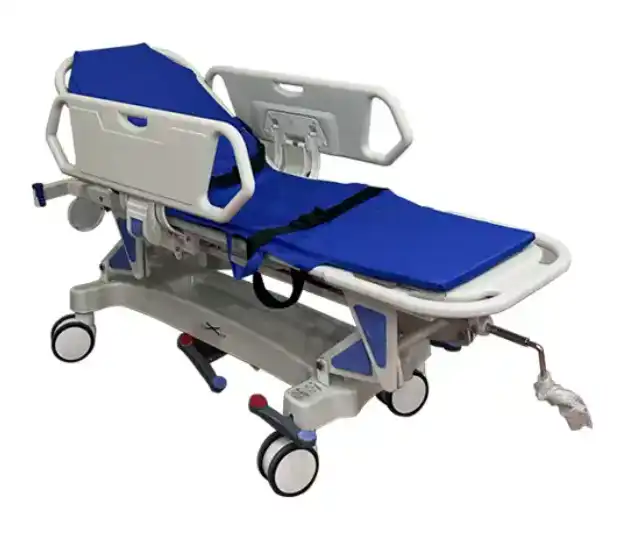
How to Choose the Right ABS Medical Trolley for Your Facility
Selecting the right medical equipment is a matter of aligning specs to the reality of operations for a Clinical Trolley. Many rushed choices result in the installation of equipment that doesn’t fully suit workflow patterns, producing inefficiencies that go on throughout the product’s service life.
Defining Your Facility's Specific Requirements
Start by tracking real-world use trends. Survey nursing personnel for pain points. Is there enough drawer space in the current trolleys? Is it tough to clean them? Do wheels stick on floor transitions? Check entryway and lift measurements to make sure that the equipment can pass freely between departments. Weigh supplies to be moved for standard load requirements. Community health facilities may choose smaller designs for tight space needs, while major hospitals may want greater capacity versions that combine several supply runs into a single journey.
Evaluating Brand Reputation and Product Certifications
Well-known manufacturers will openly publish compliance norms. Look for vendors that sell items that fulfil FDA criteria for medical devices and possess certifications such as ISO 13485 for quality management systems. GreatMicroCare has large certification portfolios for worldwide markets, making it easy for procurement teams to go through the approval procedure. Ensure that vendors can offer technical data sheets, material safety data, and test records to prove structural load testing. Brand stability counts. Exporting firms that have been around for a while know what documents are required and won’t vanish when you need new parts.
Assessing After-Sales Support and Warranty Terms
When equipment fails, patient care is interrupted; therefore, rapid assistance is critical. Before you buy, ask about warranty coverage. What is covered, for how long, and who fixes it? Often, direct manufacturing ties provide superior assistance to those of third-party distributors. Ask what the usual delivery time is for replacement parts and the availability of spare parts. Some providers give remote installation assistance, and others provide on-site assembly. With maintenance training, your biomedical engineering staff can undertake normal maintenance and do not need outside contractors.
Calculating Total Cost of Ownership Beyond Purchase Price
The initial price is merely one aspect of long-term costs. Compare the foreign supplier cost with shipping, customs charges, and installation expenses. Think about the care it needs. ABS surfaces may be cleaned with regular household goods, while specialised materials may need pricey proprietary treatments. Features such as energy efficiency and battery systems for propelled carts affect operating expenses. The durability of the trolley will determine how often you need to replace it. You may pay a little more for a trolley that lasts eight years, but it will actually cost you less per year than a cheap one that you have to replace after four years. When a facility buys several at once, it might get a volume discount that substantially lowers the price per unit.
Where to Buy ABS Medical Trolleys: Global and Regional Supplier Insights
The procurement landscape offers multiple channels, each presenting distinct advantages and challenges. Understanding these options helps importers navigate sourcing decisions with confidence.
Direct Factory Sourcing Benefits and Considerations
By purchasing straight from the manufacturer, you cut out the middleman and his markup. This may save you 20-30% off distributor prices. But factories have more freedom in terms of customisation since they control the manufacturing process. GreatMicroCare has design, manufacturing, and quality control capabilities to enable quick prototyping of changed requirements. Direct partnerships are unbeatable; they enable bulk order negotiations and project-based pricing structures that distributors can't match. This is communication between engineers who understand the product architecture, not salespeople reading spec papers. Transparency in production scheduling allows for precise forecasting of delivery dates. The downside is that you have to take care of the foreign logistics yourself. Lots of manufacturers will arrange shipping, but the burden is still on the customer.
Evaluating Online Marketplaces and B2B Platforms
Online platforms make it easy to compare several ABS medical trolley providers, connecting customers with them. Sites that focus on medical equipment gather choices and provide filters for specs, certifications, and pricing points. User reviews may be used to evaluate supplier dependability and product quality. But verification is crucial, since some ads have obsolete certificates or deceptive specs. Request recent reports of inspections and current product samples before placing significant purchases. Platform transaction safeguards may give some safety, but due diligence avoids most problems. Use these markets to identify potential suppliers, then contact them directly to gauge their response and technical competence.
Working with Regional Distributors and Medical Equipment Suppliers
Convenience – There is no waiting on foreign shipment since local distributors have Clinical Trolley merchandise already in the U.S. They take care of customs clearance, regulatory paperwork, and domestic delivery procedures. Distributor partnerships help with smaller orders, since manufacturers usually have minimum order numbers. The after-sales service becomes more accessible since domestic suppliers may send experts for repairs. The premium for these services is 15-40% above the manufacturer's direct rate. Distributors are good for urgent one-off requirements or for facilities that are not comfortable with international buying. However, healthcare institutions looking to modernise equipment across their facilities might realise significant savings by dealing directly with manufacturers.
Logistics Considerations for International Procurement
“Cross-border buying involves shipping logistics and regulatory compliance. Ocean freight is an affordable mode of transportation for bulk orders, but delivery in the U.S. takes 4-8 weeks depending on the ports of origin. Air freight reduces transportation times to 7-14 days but is much more expensive per item. Customs documents must contain business invoices, packing lists, and certificates of origin. FDA registration verification is generally a requirement for medical equipment approval. Quality packaging is essential to avoid damage in transportation — ask suppliers for enough protective materials and check before shipping. Insurance coverage safeguards against loss or damage in international transit. Experienced manufacturers such as GreatMicroCare can provide the full range of export papers and use freight forwarders that understand the needs for shipping medical equipment.
Maintenance and Longevity: Maximizing Your ABS Medical Trolley Investment
Proper care extends equipment lifespan while maintaining hygiene standards critical in healthcare settings. Systematic maintenance programs prevent premature failures and protect your capital investment.
Routine Cleaning Protocols for ABS Surfaces
ABS plastic tolerates most hospital-grade disinfectants, including quaternary ammonium compounds, hydrogen peroxide solutions, and chlorine-based cleaners at appropriate concentrations. Avoid abrasive scrubbing pads that scratch surfaces, creating microscopic crevices where bacteria can harbor. Use microfiber cloths with cleaning solutions, wiping in consistent directions to prevent streaking. Pay special attention to high-touch areas like handles and drawer pulls. After disinfection, dry surfaces completely to prevent water spots. Establish cleaning schedules matching usage intensity—emergency department trolleys may need terminal cleaning after each patient, while administrative area carts require less frequent attention. Document cleaning activities to maintain infection control compliance records.
Preventative Maintenance Best Practices
Regular inspections catch problems before they cause failures. Monthly checks should include wheel function testing, ensuring casters rotate freely and locks engage properly. Tighten any loose hardware connections, particularly around handle attachments and shelf supports. Lubricate moving parts like drawer slides with silicone-based products that won't attract dust. Examine ABS surfaces for cracks or stress marks indicating excessive load exposure. Weight capacity adherence prevents structural damage—our 45kg trolley frame supports substantial medical supplies, but exceeding rated capacity compromises integrity. Replace worn wheels promptly since damaged casters increase pushing effort and create safety hazards. Keep spare parts inventory for common wear items like caster assemblies and locking mechanisms.
Recognizing Replacement Indicators
Even well-maintained equipment eventually requires retirement. Structural cracks that don't respond to repair indicate material fatigue. Wheels that no longer roll smoothly after replacement suggest frame misalignment. Drawers that bind despite adjustment point to framework distortion. Persistent instability or wobbling means structural compromise. When repair costs approach 40-50% of replacement value, new equipment becomes more economical. Track maintenance expenses to identify units consuming disproportionate resources. Plan replacement cycles proactively—waiting for complete failure disrupts workflows and risks safety incidents. Progressive facilities budget for systematic equipment refresh programs, replacing a percentage of inventory annually rather than waiting for crisis-driven purchases.
Conclusion
Buying an ABS Medical Trolley is a strategic decision, balancing short-term budget with long-term operational effectiveness. The material benefits—corrosion resistance, lightweight durability, and simple maintenance—tackle the everyday issues healthcare personnel encounter. By carefully selecting suppliers, you can be guaranteed to meet regulatory requirements and get affordable prices. Direct manufacturing partnerships give customisation flexibility and cost savings that are especially desirable when purchasing several units or for equipment projects throughout a plant. Following the correct maintenance procedures protects your investment, extends the service life, and maintains the cleanliness standards required in healthcare contexts. Healthcare institutions get the most value by considering overall ownership costs, carefully vetting certifications, and developing partnerships with manufacturers dedicated to responsive support throughout the product lifespan.
FAQ
1. How do ABS medical trolleys compare to stainless steel in terms of safety?
ABS medical trolleys meet the same structural safety standards as metal alternatives while offering distinct advantages. The material doesn't conduct electricity, reducing shock risks around electronic medical equipment. Lighter weight decreases injury potential if a collision occurs. Rounded edges common in ABS designs minimize sharp impact points. Chemical resistance prevents degradation from repeated disinfection that can eventually weaken metal joints. Both materials support equivalent load capacities when properly engineered—our 45kg model safely transports substantial medical supplies despite weighing less than comparable steel units.
2. Can ABS medical trolleys be customized for specific medical applications?
Customization represents a significant strength of modern ABS trolley manufacturing. Manufacturers modify dimensions to fit space constraints, adjust shelf heights for specific equipment, and configure drawer layouts to match supply organization needs. Color options enable departmental coding systems. Accessory integration accommodates IV poles, computer mounts, medication dispensing systems, and specialized storage for procedure-specific instruments. GreatMicroCare provides technical consultations to translate clinical workflow requirements into practical design modifications, supporting everything from standard adjustments to completely custom configurations for unique applications.
3. What are typical international delivery timelines for bulk orders?
International procurement timelines vary based on order complexity and shipping methods. Standard production for established models typically requires 2-3 weeks after order confirmation. Custom modifications may add 1-2 weeks for prototyping and approval. Ocean freight from Asian manufacturers to U.S. ports averages 4-6 weeks, while air freight reduces transit to 10-14 days at a higher cost. Customs clearance adds 3-7 business days depending on documentation completeness. Total timelines from order placement to facility delivery generally span 8-12 weeks for ocean shipment or 5-7 weeks via air. Experienced suppliers provide detailed schedules and proactive communication about potential delays.
Partner with GreatMicroCare for Premium ABS Medical Trolley Solutions
GreatMicroCare stands ready to support your healthcare equipment procurement needs with certified, factory-direct ABS medical trolley solutions. Our KENYUE Medical product line delivers proven performance in hospitals, clinics, and care facilities across international markets. We maintain comprehensive quality control throughout manufacturing, ensuring every unit meets rigorous medical industry standards. Customization capabilities allow dimensional adjustments, accessory integration, and configuration modifications matching your specific workflow requirements. Complete certification documentation facilitates regulatory compliance, while our experienced export team handles logistics coordination for timely, secure delivery. Dedicated account managers provide personalized support from initial specification discussions through after-sales service. Whether you're sourcing a single specialized cart or outfitting an entire facility, our ABS Medical Trolley manufacturer's expertise ensures procurement success. Contact our team at Jackwang@medicalky.com to discuss your requirements, request detailed specifications, or obtain volume pricing for your upcoming projects.
References
1. Miller, J.R., & Thompson, S.K. (2021). Materials Science in Medical Equipment Design: A Comprehensive Analysis of Polymers in Healthcare Settings. Boston: Medical Technology Press.
2. Healthcare Procurement Institute. (2022). Strategic Sourcing Guidelines for Durable Medical Equipment: Best Practices for Hospital Procurement Managers. Chicago: Healthcare Procurement Institute Publications.
3. Anderson, P.L. (2020). International Medical Device Regulations: Compliance Requirements for Equipment Importers. New York: Regulatory Affairs Publishing.
4. Chen, W., & Rodriguez, M. (2023). "Comparative Durability Analysis of ABS versus Metal Medical Trolleys in Clinical Environments." Journal of Healthcare Engineering and Equipment Management, 47(3), 234-251.
5. National Association of Healthcare Material Management. (2021). Equipment Maintenance Standards for Healthcare Facilities: Protocols and Best Practices. Washington, D.C.: NAHMM Professional Development Series.
6. Williams, T.D. (2022). Total Cost of Ownership Models for Medical Equipment Procurement: Financial Analysis Tools for Healthcare Organizations. San Francisco: Healthcare Finance Publishers.