
What Is a Bedside Cabinet? Uses and Benefits for Care Facilities
2026-09-13 16:36:46
A Bedside Cabinet is not just a storage box put next to hospital beds. It is a medical furniture item designed expressly for use in healthcare settings. Care facility bedside cabinets are unlike home nightstands in that they are built to satisfy high cleanliness requirements, securely store medicines and personal goods, and promote patient autonomy and carer efficiency. Their durability, functionality, and infection-control characteristics make these specialised units essential to the day-to-day clinical operations of general hospitals, specialised treatment centers, community health institutions, aged care homes, and medical clinics throughout the United States.
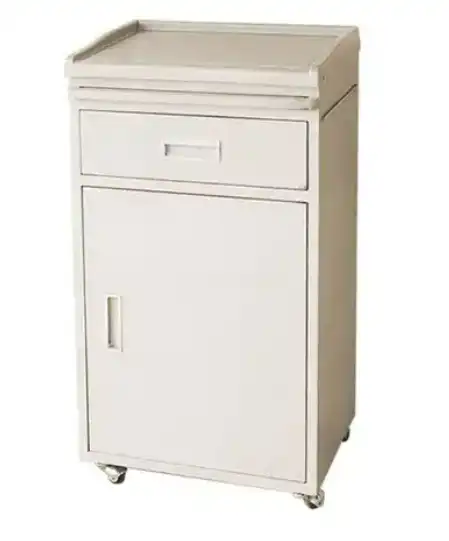
Uses and Benefits of Bedside Cabinets in Care Facilities
The strategic placement of well-designed storage units beside patient beds creates measurable improvements in care delivery, patient satisfaction, and operational efficiency across diverse healthcare settings.
Improving Patient Comfort and Autonomy
Immediate access to personal items enhances patient dignity and reduces dependency on staff for basic needs. Patients maintain control over personal belongings, eyeglasses, reading materials, and communication devices without assistance with a Ward Cabinet. This accessibility proves particularly valuable for elderly patients and individuals with mobility limitations who benefit from convenient storage positioned within arm's reach. The sense of personal space and control contributes positively to patients' psychological well-being during stressful hospitalization periods.
Enhancing Medication Security and Storage Compliance
Lockable compartments address critical security requirements in healthcare environments. Controlled substances require secure storage, preventing unauthorized access while remaining accessible to authorized personnel during medication administration rounds. Our bedside storage units feature robust locking mechanisms meeting healthcare facility security standards, protecting both patients and institutions from potential liability issues related to medication mishandling or theft.
Optimizing Space in Multi-Bed Ward Environments
Compact footprints maximize available floor space in shared patient rooms. The efficient dimensions of units like our KY-KH8943-1 model provide substantial storage without creating navigation obstacles for staff using wheelchairs, walkers, or medical equipment carts. Mobility features enable temporary repositioning during procedures, cleaning, or emergency situations, demonstrating the flexibility essential in dynamic healthcare environments.
Supporting Infection Control Protocols
Seamless surface construction prevents bacterial accumulation in joints and crevices. Materials selected for healthcare storage withstand repeated application of hospital-grade disinfectants without surface deterioration or finish degradation. Regular sanitization becomes straightforward rather than labor-intensive, supporting institutional infection prevention programs that protect vulnerable patient populations from healthcare-associated infections.
Materials, Design, and Maintenance: What Care Facilities Should Know
Strategic material and design choices determine whether bedside storage delivers long-term value or requires frequent replacement, directly impacting total cost of ownership and operational continuity.
Comparing Material Options: Durability Meets Hygiene
Steel construction offers exceptional longevity under continuous use conditions. Stainless steel resists corrosion from chemical exposure, maintains structural integrity through years of service, and provides a professional appearance aligned with institutional aesthetics. Steel spray finishes on our models combine metal strength with customizable color options, allowing facilities to coordinate furniture with interior design schemes while maintaining industrial durability standards.
ABS plastic components complement metal frameworks by offering lightweight construction, impact resistance, and simplified cleaning procedures. The non-porous nature of quality ABS prevents moisture absorption that would otherwise create bacterial growth environments. This material combination in our bedside units balances strength requirements with practical maintenance considerations.
Design Trends Balancing Function and Facility Aesthetics
Modern healthcare design emphasizes calming environments that reduce patient stress while supporting clinical efficiency. Contemporary bedside storage incorporates clean lines, neutral color palettes, and wood-grain finishes that soften institutional appearances without compromising sanitation requirements. Customization capabilities allow facilities to specify finishes matching existing décor, creating visual cohesion that enhances overall patient experience and supports healing environments backed by healthcare design research.
Establishing Effective Maintenance Protocols
Routine care extends furniture lifespan and maintains hygienic standards. Daily surface disinfection using facility-approved cleaning agents prevents pathogen transmission between patients. Weekly inspections of locking mechanisms, casters, and drawer slides identify emerging issues before they compromise functionality. Quarterly deep cleaning addresses overlooked areas, while annual professional servicing of wheeled components ensures continued smooth operation. These systematic approaches maximize return on furniture investments while supporting patient safety objectives.
Comparing Bedside Cabinets for Procurement Decisions in Care Facilities
When considering medical furniture alternatives, procurement professionals need to consider more than the initial purchase price of a Ward Cabinet to find solutions that give the best overall value.
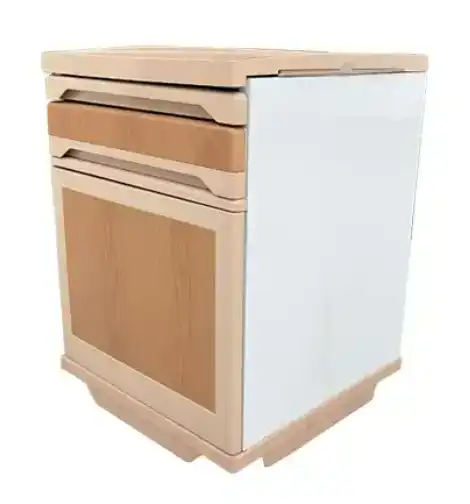
Healthcare-Specific Features Versus Standard Furniture
Medical-grade products are priced at a premium for specialised features not found in regular furniture. The structure is sealed so that no liquids may penetrate and jeopardise the structural integrity. Specifications for weight capacity enable the storage of medical equipment together with regular home goods. Mobility systems include locks that keep them in place while a patient is using them and also make it easy to adjust them when necessary. Standard furniture does not have these healthcare-specific qualities, which directly affect operational efficiency and patient safety.
Security Features: Lockable Storage Requirements
Regulatory compliance and risk management need safe storage of drugs, patients' valuables, and sensitive medical information. To examine locking methods, you must consider the control of keys, durability after frequent use, and conformity with the security procedures of the institution. Our bedside units integrate commercial-grade locks for dependable protection without the complexity that might hamper carer productivity during time-sensitive delivery of care.
Mobility Considerations: Wheeled Versus Stationary Units
Portability aspects affect cleaning efficiency, room reconfiguration flexibility, and emergency access. Individual-locking swivel casters for maximum mobility – units are sturdy during patient usage, yet can be quickly repositioned as needed. Facilities should assess caster quality, weight capacity ratings, and floor surface suitability. High-end casters are safe for floors, silent in operation, and maintain therapeutic conditions where patients may relax.
Evaluating Suppliers: Reliability and Support Services
It is not only product specs that matter when selecting a supplier, but also delivery dependability, customisation possibilities, and after-sales assistance. Being factory direct connections means no middleman markups and guarantees quality control and availability of goods. GreatMicroCare has brought together design, manufacturing, and sales functions that allow for quick reaction to specification changes, prototype requests, and technical verifications that occur throughout procurement procedures.
Our full certification paperwork makes it easy to verify regulatory compliance, and our dedicated account management team guarantees fast response times on technical requirements, order tracking, and any post-delivery difficulties. These service features mitigate procurement risk and promote flawless operation of facilities.
How to Choose the Best Bedside Cabinet for Your Care Facility
Strategic selection processes align furniture specifications with facility-specific requirements, patient populations, and operational priorities to maximize value realization.
Assessing Facility-Specific Requirements
Optimal storage configurations depend on patient demographics. The lower location of the drawers might be advantageous in geriatric institutions with decreased reach ranges and paediatric contexts where safe storage is required to limit kids' access to unsuitable materials. Acute care facilities need fast access designs that allow for emergency interventions, whereas long-term care facilities emphasise robust architecture to accommodate prolonged, ongoing usage.
Unit sizes and mobility options are determined by room arrangements. Tighter profiles are needed for compact locations, whereas private rooms might perhaps handle bigger units with more storage. Standardised proportions for multi-bed wards facilitate inter-bed space and access to equipment.
Prioritizing Safety Certifications and Compliance
Regulatory compliance shields institutions from liability and ensures patient safety. Compliance with applicable standards shows the manufacturer's commitment to quality and safety. We provide full certification documents, technical specifications, and compliance papers to all North American markets to aid verification by regulatory authorities and assist facility accreditation procedures.
Balancing Budget Constraints with Long-Term Value
The amount you pay when you buy is just one part of the overall cost of ownership. Its durable design means you’ll have to repair it less often, and its low-maintenance materials mean lower labour costs going forward. Warranty periods prevent early failure, and supplier stability guarantees parts are available over time. With that in mind, you can see that a quality unit is frequently a better bargain than a cheap one you’ll have to replace or maintain heavily.
Leveraging Customization for Institutional Branding
Personal adjustments are made to fit furniture with institutional identity and operational needs. Custom proportions meet particular space limits, with finish possibilities to blend with interior design palettes. Units may be customised to meet specific departmental requirements by adding integrated power outlets, specialised drawer dividers, or IV pole attachments. GreatMicroCare provides a wide range of customisation options, including size, accessories and structural arrangements according to precise technical specifications, without the minimum order quantity limitations that hinder smaller establishments.
Conclusion
Bedside Cabinets are critical infrastructure for enabling great patient care in a wide range of healthcare settings. Choosing the right medical-grade storage is not about comparing prices, but about assessing criteria such as material durability, hygiene compatibility, security features, and supplier skills. Specially designed units such as GreatMicroCare’s KY-KH8943-1 provide demonstrable gains in patient comfort, carer efficiency, and infection control above home furniture converted for clinical usage. Long-term value, tailored alternatives, and thorough supplier support are key elements of strategic procurement choices that not only improve the functioning of healthcare facilities but also upgrade patient experiences. Facility managers and procurement experts may use knowledge of these selection criteria to make educated judgements that advance institutional goals for care quality.
FAQ
1. What are the ideal dimensions for bedside cabinets in compact patient rooms?
Standard medical storage units typically measure between 400-500mm width, 400- 500 mm in depth, and 700-850mm height, balancing storage capacity with spatial efficiency. Our KY-KH8943-1 model at 440×460×790mm fits comfortably beside standard hospital beds without obstructing patient access or caregiver movement. Facilities with particularly limited space should prioritize narrower profiles with vertical storage optimization, while larger private rooms accommodate wider units offering expanded capacity for patient belongings and medical supplies.
2. Are built-in charging ports safe in clinical environments?
Integrated power outlets designed for medical applications meet electrical safety standards appropriate for patient care areas. These installations incorporate ground fault protection, sealed construction preventing fluid intrusion, and appropriate circuit ratings. When specified correctly and installed by qualified professionals following healthcare electrical codes, built-in charging capabilities enhance patient satisfaction and support medical device operation without compromising safety standards required in clinical settings.
3. Why are lockable compartments important for healthcare facilities?
Secure storage addresses multiple institutional priorities, including controlled substance regulations, patient valuables protection, and sensitive information security. Lockable drawers prevent unauthorized medication access, reducing diversion risks and supporting regulatory compliance. They also protect patients' personal items, reducing loss-related complaints and institutional liability. Security features represent essential rather than optional components in contemporary healthcare furniture specifications.
Partner with GreatMicroCare for Superior Medical Furniture Solutions
GreatMicroCare stands ready to support your facility's Bedside Cabinet needs with direct factory supply, ensuring consistent quality control and competitive pricing. As an established bedside cabinet manufacturer with extensive medical export experience, we understand the unique requirements of United States healthcare facilities seeking reliable, certified medical furniture solutions.
Our comprehensive service model covers specification confirmation, customized design modifications, complete certification documentation, and responsive after-sales support, minimizing procurement risks. Whether you require standard configurations or customized dimensions, our one-stop supply capabilities for medical carts, nursing beds, and auxiliary equipment streamline your procurement processes. Contact our dedicated team at Jackwang@medicalky.com to discuss your specific requirements, request technical specifications, or arrange bulk order quotations supporting your facility's operational excellence and patient care quality goals.
References
1. American Hospital Association. "Healthcare Facility Design Standards and Patient Safety Considerations." Journal of Healthcare Management, 2022.
2. Centers for Disease Control and Prevention. "Guidelines for Environmental Infection Control in Healthcare Facilities." Infection Control Standards Manual, 2021.
3. Healthcare Financial Management Association. "Total Cost of Ownership Analysis for Medical Equipment Procurement." Healthcare Finance Journal, 2023.
4. Joint Commission on Accreditation of Healthcare Organizations. "Environment of Care Standards for Patient Room Furnishings." Accreditation Manual for Hospitals, 2022.
5. National Institute for Occupational Safety and Health. "Ergonomic Guidelines for Healthcare Facility Design." NIOSH Healthcare Worker Safety Publication, 2021.
6. Society for Healthcare Strategy and Market Development. "Patient Experience and Healing Environment Design Principles." Healthcare Design Research Quarterly, 2023.