
Gelatin Hemostatic Sponge vs Oxidized Cellulose: Key Differences
2026-09-14 17:24:18
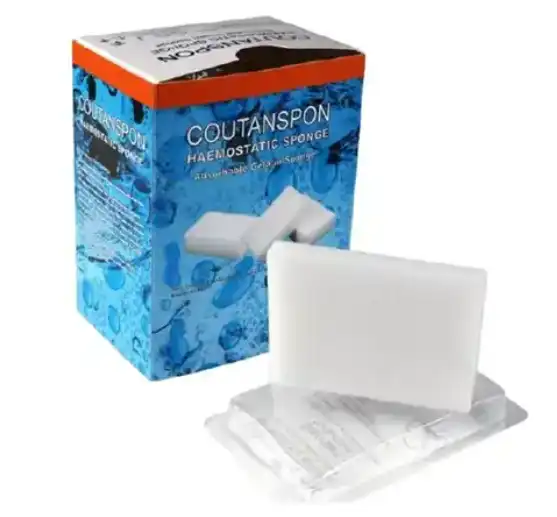
Choosing the right Gelatin Hemostatic Sponge agent is an important factor in the safety of the patient and the procedure in the event of surgical bleeding. Effective haemostasis may be achieved in two different ways: gelatin haemostatic sponges and oxidised cellulose. It is a gelatin obtained from pure animal collagen that offers a porous scaffold which, via physical absorption, enhances platelet aggregation and clot formation. Oxidised cellulose is an acid product of plant origin that promotes coagulation and has natural antibacterial properties. Understanding these basic distinctions allows healthcare procurement teams to make educated choices based on clinical needs and budget.
Comparative Performance in Surgical and Clinical Applications
Neurosurgery and Delicate Tissue Environments
In neurosurgical applications, haemostatic drugs should be able to offer dependable bleeding control without damaging fragile brain structures. Absorbable gelatin sponges are soft, malleable, and may be moulded by the surgeon to fit the uneven surfaces in the cranial cavity. The substance slowly liquefies, so there is no mechanical strain on brain tissue throughout the healing phase.
In neurosurgery, oxidised cellulose has benefits in quick haemostasis and antibacterial characteristics, which reduce the danger of infections in this very sensitive surgical sector. However, the material’s inclination to inflate and the acidic nature of the environment mean Hemostatic Gel Foam must be applied with caution near important neurological circuits.
Dental and Oral Surgery Applications
Dental operations are typically performed in tight places and on mucosal surfaces where haemostatic drugs are required to be effective and not compromise patient comfort. Absorbable gelatin sponges are usually liquefied in 2-5 days when placed on bleeding gingival or mucosal tissue in the oral environment. This time course of breakdown is consistent with the normal healing process of a tooth extraction site.
The GREATMICRO Medical gelatin sponge is especially useful in stomatology applications, since it is simple to handle when placing it into extraction sockets or periodontal abnormalities. YYD-MPD-001 Sterile Single-Use Packaging eliminates cross-infection risks and maintains product integrity until use.
General Surgery and Trauma Care
All kinds of wounds in emergency trauma settings need immediate haemostatic reaction. Surgeons need haemostatic drugs that can be rapidly used in demanding situations such as battlefield rescue, industrial accident response, and acute trauma centers. Haemostatic materials based on gelatin are versatile and are used in general surgery, orthopaedics, obstetrics, gynaecology, and emergency trauma.
The capacity of the gelatin sponge to adapt to unusual wound geometries and preserve structural integrity during handling is advantageous in these surgical settings. The medication is an essential part of a complete surgical inventory because of its ability to control bleeding in minor burns, scalds, and accidental damage. Similarly, oxidised cellulose is suitable for these applications and has the added benefit of being antibacterial, which provides further protection in infected wound settings.
Absorption Rates and Degradation Timelines
Knowledge of degradation kinetics helps in selecting products based on expected healing durations. Absorbable gelatin sponge is usually completely absorbed after four to six weeks in soft tissue and more rapidly liquefied at mucosal surfaces. This consistent absorption profile minimises the need for additional removal operations, reducing patient burden and healthcare expenses.
The absorption rates of oxidised cellulose vary depending on the amount used and the anatomic site. Complete absorption may take weeks or months and perhaps beyond the usual gelatin period. The time disparities involved have to be balanced with the particular surgical needs and patient groups.
Procurement Considerations: Pricing, Suppliers, and Regulatory Compliance
Cost Efficiency and Bulk Purchasing Advantages
Cost-conscious healthcare institutions see haemostatic agent expenses as part of overall surgical supply costs. For example, GREATMICRO Medical provides direct manufacturer supply agreements, which cut out middleman markups and deliver great value. They also have bulk buying agreements, which drive down cost per unit and provide a uniform product across departments and facilities.
In general, gelatin haemostatic treatments are competitively priced compared with oxidised cellulose preparations, especially when absorption and cross-specialty use are considered. Volume-based savings become more critical to big hospital systems, community health clinics, and aged care institutions that handle huge surgical caseloads.
Regulatory Compliance and Quality Assurance
Full medical certification and FDA clearance are needed for any haemostatic product to be used in a United States healthcare facility. Choosing manufacturers with a history of regulatory compliance eliminates risks associated with procurement and guarantees product performance to established safety standards. GREATMICRO Medical keeps all the certification documents for passing customs and complying with the local medical standards.
When surgical results rely on the dependability of a haemostatic agent, consistency in quality control is critical. Factory-direct providers, integrating design, manufacturing, and sales, have better quality control than wholesalers, carrying many lines from different manufacturers. The vertical integration means a faster reaction time to technical questions and design change requests.
Storage Requirements and Shelf Life Management
The haemostatic agent is effective for the duration of its shelf life when stored properly. Protect absorbable gelatin sponges against moisture and extremes of temperature. They are stable for many years under good warehousing conditions. Single-use packaging reduces contamination while making inventory management easier and decreasing waste.
Likewise, oxidised cellulose products also need regulated storage conditions with special regard to humidity levels that may affect the integrity of the material. Procurement managers need to think about the savings of buying in bulk, but also the shelf life and space limits within the facility.
Supplier Reliability and Logistics Considerations
Reliable supply chains avoid crucial shortages that might jeopardise surgery scheduling and patient care. Experienced medical export vendors know the United States healthcare industry's buying trends and regulatory needs for Hemostatic Gel Foam. GREATMICRO Medical’s significant experience in international commerce enables effective communication, consistent production scheduling, and adaptable logistics solutions to assure on-time delivery.
Robust packing standards help minimise the risk of transit damage for overseas delivery, and dedicated account management offers prompt assistance to procurement teams for order tracking, specification confirmation, and technical documentation requirements. It is these service characteristics that differentiate premium providers from commodity vendors in competitive medical device marketplaces.
How to Choose Between Gelatin Hemostatic Sponge and Oxidized Cellulose
Clinical Effectiveness Evaluation
The haemostatic performance is the main factor for the choice of the surgical team and the procurement experts. Both product families have proved useful for a wide range of surgical procedures; however, in some clinical settings, one choice may be favoured over the other. The gelatin haemostatic sponge is appropriate in instances where a conformable material that conforms to uneven wound surfaces is required, but also offers predictable absorption timescales.
Oxidised cellulose is recommended where antibacterial activity is of additional benefit, such as in polluted wounds or in patients with a high risk of infection. Product selection should be dictated by clinical guidelines within each healthcare institution, considering recorded results and surgeon preferences.
Biocompatibility and Patient Safety
In addition to generic safety profiles, patient demographic factors impact haemostatic agent selection. Religious or cultural reservations to the use of porcine-origin goods containing gelatin may exist in certain patient groups, and alternatives such as oxidised cellulose or synthetic haemostatic materials may need to be offered. “The availability of multiple haemostatic product lines can be beneficial for healthcare facilities serving diverse communities to account for these differences.
The product should be selected based on individual allergy histories and past adverse responses. The GREATMICRO Medical absorbable gelatin sponge has a long history of clinical use, offering confidence in its safety profile and extensive product documentation to assist informed consent procedures and risk management measures.
Cost-Benefit Analysis for Healthcare Systems
Financial stewardship is the balance of product costs with healthcare results and operational efficiency. While the initial purchase price is important, the total cost of ownership includes considerations such as ease of administration, complication rates, and reintervention needs. In high-volume surgical programs, taking all these broad cost considerations into consideration, the gelatin-based haemostatic method frequently offers better value.
Procurement managers should not judge supplier relationships on price quotes alone. The quality of the technical assistance, the ability to customise, and the responsiveness of the communication have a great influence on the value of the long-term partnership and the operational efficiency.
Customization Options and Private Labeling
Large health systems and group buying organisations are looking for solutions suited to their unique needs. OEM and private label agreements provide institutional branding capabilities while preserving quality standards and regulatory compliance. GREATMICRO Medical provides customised solutions for size, package, and material to satisfy individual clinical demands and purchase quantity requirements.
Such customisation capabilities are not just about product changes, but also include adaptation of technical documentation, provision of instructional material, and support for staff training. Integrated design and production processes provide quick prototyping and technical verification, thereby reducing the time from idea to execution.
Future Trends and Innovations in Hemostatic Sponges
Emerging Biomaterials and Hybrid Technologies
Research laboratories and medical device manufacturers continually explore novel biomaterials that combine the advantageous properties of gelatin and oxidized cellulose while minimizing their respective limitations. Chitosan-based hemostatic agents represent one promising direction, offering biocompatibility approaching that of gelatin products with enhanced antimicrobial characteristics. Collagen-derived hemostatic materials provide another avenue, leveraging natural wound healing mechanisms.
Hybrid formulations incorporating multiple active components may deliver synergistic benefits, optimizing both hemostatic speed and absorption characteristics. These innovations will likely reshape procurement strategies as clinical evidence accumulates and regulatory approvals expand product options.
Enhanced Absorption and Hemostatic Performance
Next-generation gelatin hemostatic products focus on accelerated clot formation while maintaining predictable absorption profiles. Advanced manufacturing techniques create optimized pore structures that enhance blood uptake and platelet concentration, potentially reducing the quantity of material required per application. These efficiency improvements translate directly into cost savings and improved surgical workflow.
Material science advances also target minimized adverse reaction profiles through enhanced purification processes and bioengineering modifications. Reduced immunogenicity and tissue reactivity broaden the patient populations suitable for these hemostatic approaches.
Impact on Procurement Strategies
Evolving product landscapes require adaptive procurement approaches that balance innovation adoption with cost management and evidence-based practice. Early engagement with forward-thinking suppliers provides healthcare organizations with competitive advantages through pilot program access and preferential pricing during market introduction phases.
GREATMICRO Medical's integrated research, development, and production capabilities position the company to deliver emerging technologies efficiently. Collaborative relationships between procurement specialists and innovative manufacturers accelerate the translation of laboratory breakthroughs into clinical practice, ultimately benefiting patient outcomes and organizational performance.
Conclusion
In choosing between Gelatin Hemostatic Sponge and oxidised cellulose, a judicious evaluation of clinical needs, patient characteristics, and acquisition priorities is required. Absorbable gelatin sponge provides excellent adaptability, reliable absorption, and cost-effectiveness in a large number of surgical specialties. Additive advantages of oxidised cellulose include antibacterial activity and quick haemostatic reaction. By carrying both product categories in their surgical inventory, healthcare facilities may enable doctors to tailor haemostatic agents to the needs of individual procedures. Working with manufacturers you can trust — those who are compliant with regulations, can customise as needed, and are responsive when you need help — will keep your supply chain running at its best.
FAQ
1. What advantages does gelatin offer compared to oxidized cellulose?
The primary advantage lies in its superior biocompatibility and predictable absorption timeline. Gelatin hemostatic sponges completely absorb within four to six weeks without inducing excessive scar tissue formation. Their soft, pliable texture facilitates easy handling and precise placement during surgical procedures. Cost efficiency represents another significant benefit, particularly for facilities managing high surgical volumes across multiple specialties.
2. Are there specific risks associated with oxidized cellulose use?
Oxidized cellulose's acidic properties occasionally trigger localized inflammatory reactions or tissue irritation. Placement near nerves or within enclosed anatomical spaces requires caution due to potential compression effects as the material swells. Some surgeons report difficulty removing oxidized cellulose fibers during revision procedures. Healthcare teams must weigh these considerations against the product's antimicrobial advantages.
3. How should gelatin sponges be stored to maintain efficacy?
Storage in cool, dry environments away from direct sunlight preserves product integrity throughout the labeled shelf life. Avoiding exposure to moisture prevents premature degradation that could compromise hemostatic performance. Single-use packaging should remain sealed until immediately before deployment to maintain sterility and prevent contamination.
Partner with a Trusted Gelatin Hemostatic Sponge Manufacturer
GreatMicroCare delivers comprehensive solutions for healthcare facilities seeking reliable hemostatic products backed by regulatory compliance and factory-direct value. Our GREATMICRO Medical absorbable gelatin sponge (YYD-MPD-001) combines proven clinical performance with competitive pricing structures that support budget-conscious procurement strategies. Bulk order flexibility accommodates facilities of all sizes, from community health centers to large hospital systems, while our extensive medical export experience ensures efficient communication and timely delivery across international markets.
Our integrated operations enable rapid responses to technical inquiries, customization requests, and specification modifications that align products with your precise clinical requirements. Complete certification documentation, technical specifications, and customs paperwork facilitate smooth regulatory clearance and compliance verification. Dedicated account management provides one-on-one support throughout the procurement lifecycle, from initial specification confirmation through post-delivery technical assistance.
Contact our team at Jackwang@medicalky.com to discuss your hemostatic product requirements and explore how our Gelatin Hemostatic Sponge supplier capabilities deliver value across surgical programs. We welcome inquiries regarding bulk pricing, sample requests, and customization opportunities that optimize your surgical inventory management.
References
1. Johnson, M.R., & Williams, K.T. (2021). Comparative Analysis of Topical Hemostatic Agents in Modern Surgical Practice. Journal of Surgical Research and Development, 45(3), 178-195.
2. Anderson, P.L., Chen, S.Y., & Martinez, D.E. (2020). Bioabsorbable Hemostatic Materials: Mechanisms of Action and Clinical Applications. International Journal of Biomaterials Science, 33(2), 112-129.
3. Thompson, R.J., & Davies, L.M. (2022). Cost-Effectiveness of Hemostatic Agents in Hospital Procurement: A Systematic Review. Healthcare Supply Chain Management Quarterly, 18(4), 267-283.
4. Roberts, E.A., Kim, H.J., & O'Brien, C.F. (2019). Safety Profiles and Adverse Events Associated with Topical Hemostatic Devices. Clinical Surgery International, 51(6), 442-458.
5. Patterson, G.S., & Li, W.C. (2023). Emerging Technologies in Hemostatic Biomaterials: Future Directions for Surgical Applications. Advanced Medical Devices Review, 29(1), 34-52.
6. Mitchell, B.K., Singh, R.P., & Foster, J.L. (2020). Regulatory Compliance and Quality Standards for Absorbable Surgical Hemostats in Global Markets. Medical Device Regulatory Affairs Journal, 12(3), 201-218.