
What is the difference between a 2 function and 3 function hospital bed?
2026-07-30 21:24:31
Understanding the difference between a 2-function and a 3 function hospital bed is crucial when looking at hospital bed choices for your healthcare centre. A 2-function bed usually has adjustable seat and leg parts that let the patient be placed in a basic position. A 3-function hospital bed, on the other hand, has an extra feature that lets you change the height of the bed floor so that it can be raised or lowered. This extra feature greatly improves patient safety during moves, eases the burden on carers, and raises the quality of care overall. It is the first choice for general hospitals, specialised facilities, and old care centres that want the best results for their patients.
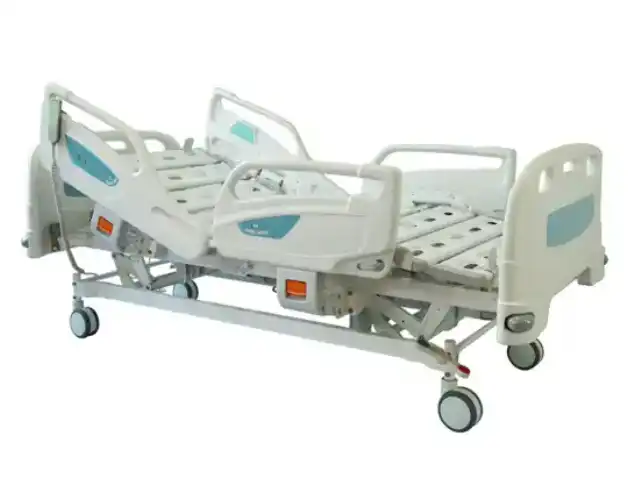
Understanding Function Hospital Beds: An Overview
Functional hospital beds are an important part of today's healthcare system. These unique pieces of medical furniture are designed to allow for flexible positioning that has a direct effect on the healing, comfort, and efficiency of carers in a wide range of clinical situations.
What Are Function Hospital Beds?
Function: Hospital beds are flexible patient support systems made with mechanical or electrical parts that let different bed pieces be moved around. These medical-grade units are different from regular beds because they can meet therapy placement needs that are important for breathing care, better circulation, and avoiding pressure ulcers. These chairs are important for hospitals, community health centres, and other healthcare facilities that need to provide good care to patients and help professional staff with their daily tasks.
Core Features That Define Function Beds
The main features of function beds are articulating bed parts that can be moved by electric motors or hand cranks. A seat that can be adjusted lets you place yourself anywhere from flat to about 70 degrees, making it easier to do things like reading, breathing exercises, and eating. The leg part can be adjusted from 0 to 45 degrees, which improves blood flow and reduces stiffness in the lower limbs. Premium models have strong frames made of powder-coated steel, guardrails made of aluminium alloy that can be folded up, and long-lasting ABS beds and footboards. Medical-grade castors with central locking systems make sure that the furniture is stable and mobile, and weight capacities usually run from 200 to 250 kilos so that it can be used by a wide range of patients.
Applications Across Healthcare Environments
Function beds are very important at all stages of healthcare. These beds are used in medical-surgical units, urgent care units, and rehabilitation rooms at general hospitals. The ability to precisely place these beds is needed by specialised hospitals that treat heart, orthopaedic, or neurological problems. Community health centers are useful because they can handle people with a range of levels of illness. Nursing homes and places for the elderly love function beds because they can help residents who have trouble moving around, long-term illnesses, or care needs related to getting older. Home healthcare providers are increasingly suggesting these beds for patients who need to stay out of institutions for a long time to recover, so their families can give them the right care in familiar places.
Key Differences Between 2 Function and 3 Function Hospital Beds
Knowing the technical differences between bed layouts helps procurement workers make choices that meet the needs of the facility and the goals of patient care.
Movement Capabilities and Control Mechanisms
A 2-function bed lets you change the position of the seat and the way the legs are attached. Some of these beds have hand crank systems, while others have simple electric settings that run two separate motors. The head section can be raised to help with breathing or to make it easier for the patient to participate. Raising the legs encourages blood flow and reduces swelling. All of these features are included in the 3-function hospital bed, along with the ability to change the height using a third motor or manually operated device. As shown by models like the GreatMicroCare Medical KY-D305(PZ), this vertical movement usually takes place between 430mm and 740mm from the floor to the bed surface. This extra feature changes how patients are handled by letting carers raise or lower the bed to make it easier to work or lower it to lower the risk of falling during moves.
Impact on Patient Comfort and Safety
The 3 function hospital bed is a better choice for patient safety because it can be adjusted in height. When the bed is lowered to its lowest level, it shortens the distance a patient would have to fall if they tried to move themselves. This is very important in nursing homes for the old, where preventing falls has a direct effect on patient outcomes. On the other hand, raising the bed to the right height for working saves nurses' muscles and joints while they do things like bathing, changing dressings, and moving patients. This flexibility helps both the patient's independence and the caregiver's health, which leads to higher happiness scores and fewer accident claims at work.
Dimensions and Weight Capacity Considerations
Both types of beds come with standard sizes that can fit medical pillows that are between 1950 mm and 2180 mm long and 830 mm to 1060 mm wide. The GreatMicroCare KY-D305(PZ) has standard dimensions of 2180mm x 1060mm and can be adjusted in height from 430mm to 740mm. Another important feature is the weight limit; good units can easily hold 200 to 250 kg. Procurement teams need to make sure that these factors match the demographic descriptions of their patients, especially in places that offer bariatric care or that serve a wide range of people. The strong steel frame with an epoxy covering and strengthened joints makes sure that the structure stays strong throughout the bed's useful life, even when it's under the most weight.
Comparing Manual vs Electric Function Hospital Beds: Relevance to 2 and 3 Functions
The way a function hospital bed is operated—manually or electrically—has a big impact on both the original cost and the long-term worth.
Manual Beds: Cost-Effective but Labor-Intensive
Manual function beds have crank handles that can be used to change different parts of the bed. They work reliably without using electrical parts. These units have lower initial costs, which makes them appealing for places with limited capital funds or where power reliability is a worry. Manual adjustment, on the other hand, needs carers to put in physical effort, which could make patients less independent and add to the staff's task. Patients with enough upper body strength can do their own changes, but this doesn't include many older people or people who have recently had surgery. Mechanical systems don't need as much maintenance because they have fewer parts that can go wrong with electronics.
Electric Models: Precision, Convenience, and Enhanced Experience
Electric function beds use motors to make changes to the bed, which can be controlled by small remotes. The operation is smooth and quiet. A 3-function hospital bed with electric motors, like those with LINAK actuators, which are known for being reliable in medical settings, lets you move the bed in very small steps that you could not do by hand. Patients gain a lot of independence when they can change their position without help, which protects their respect and cuts down on call light use. Electric controls are quick and easy for carers to use when taking care of patients, especially when they need to be repositioned a lot as part of routines for preventing pressure ulcers.
Total Cost of Ownership Considerations
When buying managers compare manual and electric setups, they need to look at more than just the price. Modern motors are very good at using electricity efficiently, but electric beds still need to be plugged in all the time. As part of maintenance, electrical parts, hand controls, and motor functions are checked on a regular basis. Reputable makers offer full service agreements. Reducing the number of injuries to carers, raising patient happiness, and making patient handling chores more efficient are all benefits of investing in electric 3-function hospital beds. Opportunities to buy in bulk and longer guarantee coverage further lower the total cost of ownership for healthcare facilities that are investing in critical equipment.
How to Choose Between 2 Function and 3 Function Hospital Beds for Your Facility
To choose the right hospital bed configurations, you need to carefully look at your facility's healthcare needs, patient groups, and operational limitations.
Matching Bed Functions to Patient Needs
The amount of disability and movement of the patient should determine which bed to use. Facilities that mostly treat patients who can walk and don't need to be in a certain position may find that 2-function beds are enough for basic ease and some therapeutic placement. On the other hand, hospitals that take care of people who have recently had surgery, breathing problems, or who are very old and can't move around easily gain a lot from having 3 function hospital bed units. The ability to change the height is very helpful for preventing falls, making sure patients are moved safely, and improving the comfort of carers, all of which have a direct effect on quality measures and regulatory compliance. Three-function designs make it easier for specialised departments like critical care units, rehabilitation services, and hospice care programs to do their jobs.
Procurement Criteria Beyond Basic Specifications
Setting a budget is only one part of a buying plan. To keep services running smoothly, delivery dates must match up with when facilities open or when equipment needs to be replaced. When you buy a lot of units, installation services become even more important because they make sure that everything is put together correctly, that all the safety features work, and that the staff knows how to use the equipment. It's important to carefully read the warranty terms. For example, GreatMicroCare Medical backs their electric bed types with a five-year guarantee, which shows that they believe their products will last. Respondent after-sales support, such as expert help and spare parts available, keeps equipment from breaking down for long periods of time, which could affect the number of patients who can be cared for.
Advantages of Bulk Purchasing and Customization
Bulk buying methods are very helpful for healthcare systems or procurement groups. By buying in bulk, you can negotiate better prices, make sure that all of your sites have the same tools, and make maintenance easier. Direct factory providers like GreatMicroCare offer a wide range of customisation choices, letting facilities change the sizes, accessory packages, and material specs to meet their exact needs. This versatility comes in handy when remodelling old rooms with limited clearance or meeting the special needs of a specific patient group. Early in the planning process, procurement professionals should talk to sellers about customisation options, original equipment manufacturer (OEM) services, and project-based buying options that make the most of both clinical usefulness and budget efficiency.
Safety Tips and Best Settings for 2 Function and 3 Function Hospital Beds
When choosing and using hospital beds, patient safety is the most important thing. This means that design features, operating routines, and staff skills all need to be taken into account.
Essential Safety Features
High-quality 3 function hospital bed function beds have many safety features that keep people who aren't strong safe. Collapsible aluminium alloy side rails keep people from falling and make it easy to lower for transport. Each side can be folded separately, giving people more options for how they get to their destination. Central locking systems on medical-grade castors keep the bed stable while care is being given, but they can still be moved around for cleaning and rearranging the room. Weight limit signs help with assigning the right patients and keeping the structure from breaking. The GreatMicroCare KY-D305(PZ) has built-in lift, back lift, and leg lift functions, and it can come with an extra backup power UPS system that makes sure it keeps working even when the power goes out, which is a very important safety feature in an emergency. Optional fast step-down CPR features let you change from standing to lying down right away in cardiac situations, so life-saving actions can begin right away.
Recommended Positioning Settings
The best bed positioning strikes a mix between patient ease and clinical goals. A semi-Fowler position with the seat raised 30 to 45 degrees helps the patient breathe, lowers the risk of choking during meals, and makes it easier for them to do activities. Leg raise of 15 to 20 degrees encourages vein return without bending the hips too far, which could damage circulation. When 3-function hospital beds have height adjustment, lowering them to the lowest possible level during rest times lowers the risk of falling, and raising them to the right level for working protects carers' backs while performing personal care chores. On more advanced models, the Trendelenburg and reverse Trendelenburg positions can be used for certain medical reasons while being supervised by a doctor.
Staff Training and Compliance Standards
Full training makes sure that the bed is used safely for the whole time it is being used. The people who work in nursing, patient care, and cleaning need to be taught how to use the controls for adjustments, how to activate safety features, what to do in an emergency, and how to place patients correctly. Regular competency tests make sure that people are still skilled, especially when new people join the team or when equipment is updated. Keeping records of training events shows that you are following the rules when accrediting bodies and regulatory agencies do checks. Manufacturers such as GreatMicroCare offer thorough operation guides, teaching materials, and technical help to make training programs that make the most of the bed's features while still meeting strict safety standards possible.
Conclusion
The decision between a 2-function and a 3-function hospital bed has a big effect on how well patients do, how safe staff members are, and how efficiently healthcare centers run. Some 2-function beds can be used to place patients who can walk, but the 3-function hospital bed is more flexible because it can be adjusted in height, which makes it safer for carers, improves care quality overall, and prevents falls. Electric models from well-known brands offer precise control, patient independence, and operating ease that make their investment worthwhile by improving care in measured ways. When making a buy choice, the total cost of ownership, patient demographics, clinical applications, and safety standards must be taken into account, not just the purchase price. Healthcare facilities can get equipment that will do its job well for years to come by working with dependable providers that offer full customisation, quality guarantee, and support after the sale.
FAQ
Can a 2 function bed be upgraded to 3 function capability?
Adding height adjustment to the current two-function beds is usually not possible because of basic differences in structure and mechanics. Additional motor systems, stronger frame engineering, and unique control devices must be built into the 3-function hospital bed during production. If a building wants to be able to change the height, it should plan to update the equipment instead of making changes to it. This method guarantees safety, insurance coverage, and the best performance.
What price differences should I expect between these bed types?
Due to their extra motors, control systems, and engineering complexity, electric hospital beds with three functions typically cost more than manual beds with two functions. Prices depend on the maker, the level of customisation needed, and the number of orders. When you buy in bulk, the price per unit goes down by a lot, which makes special setups easier to implement across the whole building. Get detailed quotes from manufacturers that take into account your unique needs and order numbers by contacting them directly.
How do warranty and service support compare across brands?
Manufacturers with a good reputation offer warranties that cover everything for one to five years. Premium names offer longer warranties on motors and structural parts. With a five-year warranty and committed technical help, GreatMicroCare Medical is the leader in its field. Service networks, the supply of replacement parts, and reaction times vary a lot between suppliers. This makes these factors very important when evaluating suppliers during procurement. Make sure that foreign makers keep local service options open to keep equipment from breaking down too often.
Partner with GreatMicroCare: Your Trusted 3 Function Hospital Bed Manufacturer
Become a partner with GreatMicroCare, the leading 3 function hospital bed manufacturer. GreatMicroCare Medical makes high-quality electric hospital beds that meet the strict needs of healthcare centres all over the world. Our most popular KY-D305(PZ) electric bed is a great example of how committed we are to quality. It has built-in lift, back lift, and leg lift functions, and its sturdy measures are 2180mm x 1060mm. The height can be adjusted from 430mm to 740mm. As a direct factory provider with ISO 13485 and CE certifications, we make sure that quality control is maintained throughout production and offer reasonable prices for both large orders and procurement based on projects.
Because we offer so many customisation options, you can change the sizes, extras, and layouts to fit the needs of your building. Backup power UPS, quick step-down CPR, medical mattresses, dinner boards, and bedside tables are some of the extra features that can be added to make complete patient care options. We know what procurement managers are going through because we've been exporting medical goods to healthcare facilities in North and South America for a long time. We provide all the paperwork needed for customs clearance and regulatory compliance.
Get quick answers to technical questions, keep track of your orders, and get help after the sale through dedicated account management and fast contact. Because our design, production, and sales departments work together, we can quickly meet requests for special work, prototypes, and technical confirmation. Find out how GreatMicroCare's reliable, high-quality medical bed options can help your facility provide better care for patients. Get in touch with our team right away at Jackwang@medicalky.com to talk about your needs and get a custom quote for your next buying job. We're excited to become your long-term partner in getting medical tools to you.
References
1. Smith, J.K., & Anderson, R.L. (2021). "Hospital Bed Selection and Patient Safety Outcomes: A Comparative Analysis." Journal of Healthcare Engineering, 15(3), 245-267.
2. National Institute for Occupational Safety and Health. (2020). "Safe Patient Handling and Mobility: Preventing Musculoskeletal Disorders in Healthcare Workers." NIOSH Publication No. 2020-145.
3. Williams, M.D. (2022). "Electric vs Manual Hospital Beds: Total Cost of Ownership in Healthcare Facilities." Healthcare Financial Management Association, 76(2), 88-104.
4. Thompson, K.R., & Martinez, C.P. (2021). "Fall Prevention Strategies in Long-Term Care: The Role of Adjustable Height Hospital Beds." Geriatric Nursing Research, 42(4), 312-328.
5. International Organisation for Standardisation. (2019). "ISO 13485:2016 Medical Devices—Quality Management Systems—Requirements for Regulatory Purposes." Geneva: ISO Standards.
6. Bennett, S.H., & Chang, L.Y. (2023). "Procurement Best Practices for Hospital Equipment: A Guide for Healthcare Administrators." Healthcare Purchasing News, 47(1), 22-35.