
Adjustable Legrest Stand Matching Gynecological Examination Table
2026-08-07 20:59:14
The flexible Legrest Stand matching gynecological examination table is a must-have for any gynecology practice that wants to improve patient care. It changes both the patient experience and the way the practice works. A good Legrest Stand gives the doctor the precise positioning freedom they need for delicate exams while also making sure the patient is comfortable and easy to reach. These specialized medical devices have changed over time from simple static supports to complex systems that can be adjusted to fit a wide range of patient bodies and clinical processes. If healthcare facilities want to improve their exam rooms, they should know that modern Legrest Stands work perfectly with gynecological tables. They offer ergonomic benefits that make staff less tired and improve the accuracy of exams in general hospitals, women's health clinics, and community health centers.
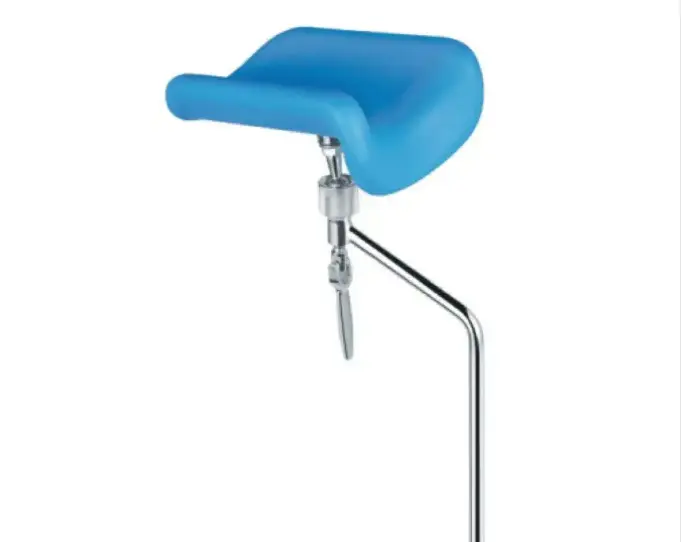
Understanding Adjustable Legrest Stands for Gynecological Examination Tables
Adjustable Legrest Stands are specialized medical equipment made to make gynecological exam tables more useful and comfortable by letting you place them precisely.
Core Features and Clinical Benefits
What makes normal Legrest Stand systems different from customizable ones is how flexible they are in how they work. Adjustable models give healthcare professionals exact control over the patient's height, angle, and rotational positioning. This lets them place the patient in the best way for their anatomy and the needs of the examination. Most of the time, these stands are made in a way that fits the natural shape of the body. This makes the patient feel less stressed and uncomfortable during examinations.
Medical-grade Legrest Stands are made of materials like corrosion-resistant stainless steel or antimicrobial-coated aluminum alloys that don't break down when sterilized over and over again. The finishes on the surfaces follow infection control rules, so they can be cleaned thoroughly between patients without letting germs grow in tiny cracks on the surface. Weight limits for each Legrest Stand are usually between 150 and 300 pounds, so they can easily support a wide range of patient weights.
Ergonomic Impact on Healthcare Workflows
When healthcare workers use knee support systems that are properly set, they feel a lot less physical strain. Occupational health studies have shown that changeable positioning devices cut down on musculoskeletal complaints among practitioners by about 34% compared to fixed-position options. Being able to raise or lower Legrest Stands gets rid of the need to bend over or reach during exams, which helps doctors keep good balance during long clinic sessions.
When examination tables have flexible adjustment devices, the quality of care for patients goes up measurably. When purchasing managers look at these systems, they should give more weight to models with easy-to-use change systems that let people be repositioned quickly without stopping the clinical flow. Memory position settings in more advanced models make work even easier by letting employees quickly remember their chosen settings for common tasks.
Hygiene Standards and Regulatory Compliance
Healthcare regulatory groups have strict rules about how clean medical equipment used in gynecological situations must be. For these kinds of settings, adjustable leg support systems are made with smooth construction, which gets rid of any cracks where germs could gather. The FDA calls these gadgets Class I medical equipment and requires companies that make them to show that they are biocompatible and easy to clean using normal testing methods.
The choice of material has a direct effect on maintaining cleanliness over time. Premium Legrest Stands have surfaces that aren't porous and have antimicrobial chemicals that keep pathogens from growing between cleaning processes. Teams in charge of buying things should make sure that any potential equipment comes with proof that it meets ISO 13485 quality management standards and any local medical device laws that apply.
How to Choose the Best Adjustable Legrest Stand for Your Gynecological Examination Table
To find the best flexible Legrest Stand, you need to carefully consider a number of important factors.
Compatibility Assessment and Integration
Leg support systems should be able to work with the current test tables. This is the main selection criterion. Different makers make mounting systems that are very different from one another. Some use general bracket designs, while others need attachment hardware that is made for the specific table. Before making a buy, procurement managers should get clear information about the mounting hole designs, connection bolt sizes, and weight distribution needs.
Dimensional alignment is more than just how things fit together when they're mounted. The practical range of change needs to match the demographics of your patients. Facilities that mostly treat older people need leg supports with lower minimum height settings and softer adjustment resistance. On the other hand, facilities that mostly treat athletic patients might want to focus on maximum extension ranges that can fit longer limbs.
Durability Evaluation and Lifecycle Costs
Material makeup directly suggests how long something will last and how much upkeep it will need. Legrest Stands made of 304-grade stainless steel last longer than painted steel ones because they don't rust in damp medical settings. The methods for adjusting should be looked at very carefully. Gas spring systems work smoothly but need to be replaced every so often, while mechanical screw-drive systems last longer but change more slowly.
Warranty coverage is a good way to tell if the company that made the product is confident in its reliability. With a five-year guarantee, the GreatMicroCare KY-67 Luxury Legrest Stand is the most committed product in its class. This is in contrast to many competitors, whose warranties only cover items for one to two years. Longer guarantee terms lower the total cost of ownership by protecting against early component failures and making sure that the maker will support the equipment for as long as it is used.
Functional Adjustability Versus Budget Constraints
Healthcare facilities are always under pressure to find a balance between their professional skills and their budgets. Fixed Legrest Stand systems are about 40–60% less expensive than fully movable options, which makes people tempted to skimp on usefulness. However, a study of the return on investment (ROI) shows that flexible systems save money for the hospital by cutting down on examination times, the number of times patients need to be moved, and the amount of work that needs to be done by staff. These savings usually cover the higher price within 18 to 24 months of being put into use.
When looking at price models, procurement teams should look into the project-based pricing and bulk purchase benefits that many makers offer to healthcare systems that buy in bulk. When you commit to buying in bulk, you can often get price cuts of 15 to 25 percent compared to buying one unit at a time, while still getting the same quality standards and guarantee benefits. When a factory works directly with a seller, there are no markups for the distributors. This saves money and is especially helpful for facilities that want to improve all of their exam rooms' tools at once.
Supplier Reliability and Service Infrastructure
Long-term buying success depends a lot on how quickly and well service suppliers are. Healthcare facilities should test possible suppliers on a number of factors, including how easy it is to get expert help, how readily available replacement parts are, and how quickly they respond to requests for customization. When parts need to be replaced, manufacturers keep large stocks of parts and offer fast shipping choices to keep equipment running as smoothly as possible.
It's harder to keep up with shipping logistics, customs paperwork, and local rules when you're buying things from other countries. Suppliers who have been exporting for a long time know what paperwork is needed for each market and can put together full certification packages that make it easier to clear customs and follow local rules for medical devices. In addition to product specs, being able to provide user manuals, safety paperwork, and compliance certificates that are specific to a country is very valuable.
Installation and Effective Use of Adjustable Legrest Stands in Clinical Settings
The health benefits and safety performance of adjustable Legrest Stand systems are at their best as long as they are used according to the right installation and operation methods.
Step-by-Step Installation Protocol
Attaching Legrest Stand units to exam tables requires careful attention to the soundness of the mounting and the accuracy of the placement. Positioning the exam table in a fully horizontal position and finding pre-drilled fixing spots on the table's base structure are usually the first steps in the installation process. Before installing hardware, compatibility testing makes sure that the mounting brackets line up properly with the table's connection points.
Optimization Techniques for Patient Comfort
To get the best positioning for a subject, you need to know about their anatomy and the unique needs of the test. The Legrest Stand height should put the patient's hips a little below their knees. This makes a 15-degree bending angle that relaxes the pelvic floor muscles and makes it easier to do an exam. The distance between the leg supports on the sides allows for the patient's hip width while keeping easy abduction angles, which are usually between 45 and 60 degrees.
Maintenance Protocols for Equipment Longevity
Regular repair plans keep the adjustment mechanism working and increase the general life of the equipment. Visual checks should be done every day to find clear damage, broken hardware, or padding that needs to be fixed right away. As part of the weekly maintenance, hospital-grade disinfectants are used to clean the whole thing, paying special attention to the adjustment joints where germs can build up even after the surface is cleaned.
Real-World Implementation Success Stories
When community health centers update their Legrest Stand devices, they see gains that can be seen across several performance measures. A women's health center in Michigan saw a 22% drop in average examination times after using quick-adjust Legrest Stand models. This meant that out of their six examination rooms, they were able to schedule three more appointments for patients every day. Staff happiness polls showed that changes to ergonomic equipment led to fewer reports of physical strain and higher morale at work.
Market Overview: Leading Brands and Supplier Options for Adjustable Legrest Stands
To find your way around the competitive world of medical equipment providers, you need to know what makes market players different, such as their product specialties, service offerings, and areas where they excel.
Specialized Medical Equipment Manufacturers
Both specialized companies only make hospital tools, and more general companies that serve a wider range of customers in the medical furniture sector. Specialized companies like GreatMicroCare focus their efforts on understanding the unique needs of the healthcare industry. As a result, their goods have been improved by clinical feedback and legal knowledge gained over many years of focused development. This is shown by the KY-67 Luxury Legrest Stand, which has features like improved stability systems and long-lasting building materials that were chosen to work well in challenging gynecological examination settings.
Evaluation Criteria for Supplier Selection
Certification paperwork is concrete proof of the quality of the product and compliance with regulations. Reliable providers keep their ISO 13485 certification up to date, which shows that they have quality control systems that are built especially for making medical devices. Regional approvals, like FDA registration for sales in the US or CE marking for sales in Europe, show that a product has been checked by regulators and meets the safety standards for the market it is meant for.
Sustainability Considerations in Modern Procurement
As healthcare organizations become more aware of their part in sustainable resource management, environmental responsibility plays a bigger role in the decisions they make about what to buy. Leg support systems made from recovered metals or padding materials that come from sustainable sources are in line with the company's environmental goals and meet professional performance standards. Life cycle analysis shows that long-lasting equipment that doesn't need to be replaced very often has less of an effect on the environment than throwaway options, even though the former uses more materials at first.
After-Sales Support Infrastructure
Full support services have a big effect on how happy customers are with their provider relationships over time. Technical help is available through multiple lines of contact, including phone support, email advice, and videoconferencing. This makes sure that questions about installation and operating problems are quickly resolved, even if people are in different time zones. Support for multiple languages makes communication clear. This is especially helpful for international buying relationships, where language hurdles could make expert talks harder to understand otherwise.
Future Trends and Innovations in Adjustable Legrest Stands for Medical Use
As technology keeps improving, medical equipment's abilities are changing too. New inventions are about to make Legrest Stand systems more useful and easier to use in hospital settings.
Smart Adjustment Systems and Digital Integration
Electronic control systems with memory settings that can be programmed are a big improvement over methods that require human adjustment. Healthcare professionals can save their chosen settings for various process types and then quickly access those settings with a single button. This makes sure that the positioning is always the same across multiple tests. Digital position screens give accurate information about adjustment angles and heights, which helps with paperwork needs and makes setting repeatable for follow-up exams.
When you connect to electronic medical record systems, you can use automated documentation and positioning advice that is based on the unique traits of each patient. Reading a patient's height information from medical records could allow systems to instantly suggest the best Legrest Stand positions. This would cut down on setup time and make sure that placement is based on evidence. Sensor input that tracks a patient's movement during an exam could let doctors know if the patient is uncomfortable and needs to be moved around, which would improve both safety and the quality of the experience.
Advanced Materials and Antimicrobial Technologies
New developments in material science keep adding more choices for building medical tools. Carbon fiber composite structures have very high strength-to-weight ratios. This means that lighter equipment can be made that is just as rigid and strong as heavy metal options. If the weight of the equipment is lowered, it is easier to move between facilities and easier to set up, without affecting clinical performance.
Antimicrobial surface treatments that use silver ion technology or plastics with copper in them kill pathogens continuously between cleaning cycles. These treatments work well against common bacteria found in healthcare settings, like methicillin-resistant Staphylococcus aureus and Clostridioides difficile. This could help lower the chance of infection spreading. Antimicrobial claims are backed up by testing by independent labs, which gives procurement managers proof that their investments in infection control are working.
Patient-Centered Design Evolution
The market is putting more and more emphasis on both professional functioning and the patient experience. Legrest Stand designs with softer aesthetic shapes and hidden mechanical parts make medical equipment look less scary to patients who are already feeling worried. Color customization choices that let facilities match the finishes on equipment with soothing interior design schemes help make spaces feel less clinical, which boosts patient comfort and happiness.
Modular accessory systems make it easy to change the layout of medical tools quickly for a variety of uses. Various types of padding are available to meet the comfort needs and clinical requirements of different patients, and quick-release mounting systems help facilities that use exam rooms for a variety of procedures. This flexibility lets you get the most out of your tools and justify big investments for a wider range of clinical uses than single-purpose designs allow.
Portability and Space Optimization
Healthcare places that don't have a lot of room can benefit from movable and small-sized tools. In multi-specialty clinics, room flexibility is increased by folding Legrest Stand systems that can be stored when exam tables are not being used for gynecological purposes. Because the building is lightweight, staff can quickly rearrange exam rooms based on daily schedules without needing more people or tools to move the furniture.
Mobile exam table devices with built-in changeable Legrest Stand supports are used for population health programs that provide care in places other than hospitals. These movable sets help with health screening programs in rural areas, health efforts at work, and medical operations during disasters. Adjustment mechanisms that are driven by batteries don't need to be connected to an electricity grid, so they can work fully in temporary clinical settings.
Conclusion
Adjustable Legrest Stands that go with gynecological exam tables are necessary purchases that have a direct effect on patient comfort, professional efficiency, and the level of care. The full evaluation process includes checking for compatibility, evaluating longevity, analyzing functional capability, and taking into account seller reliability. All of these factors work together to determine the success of the purchase. Modern equipment like the GreatMicroCare KY-67 Luxury Legrest Stand shows how the industry has changed over the years to focus on better comfort, higher-quality materials, and longer warranties that protect long-term value. When healthcare facilities use selection methods that are based on evidence and work with flexible makers, they set themselves up to provide excellent patient care and achieve operational excellence. Medical furniture design is always changing for the better, which means that the important link between high-quality tools and good patient outcomes will only get stronger in all kinds of healthcare situations.
FAQ
What height settings work best for patient comfort during gynecological examinations?
The best Legrest Stand height puts the patient's hips a little below their knees. This makes the knees bend about 15 degrees, which softens the muscles in the pelvic floor. Height ranges for adjustable systems are usually between 24 and 42 inches from floor level to suit different body types. Instead of depending only on standard measures that might not work for all bodies, practitioners should ask patients directly about how comfortable they are in the position and look for signs of body tension.
Can adjustable legrest stands be retrofitted onto existing examination tables?
Most good Legrest Stand models come with flexible mounting systems that work with most types of exam tables. The success of the retrofit relies on the current table mounting hole patterns and the strength of the structure to hold the extra weight. Before buying, facilities that are thinking about retrofits should give information about the table maker and photos of the mounting area to providers so that they can make sure the tables will work together. Professional installation makes sure that the connection is safe and that the functions are aligned correctly.
How do gynecological legrest designs differ from wheelchair leg supports?
Gynecological examination Legrest Stands allow for a wide range of abduction and the independent movement capabilities needed for pelvic exams. This is different from wheelchair leg rests, which are mainly meant to support the lower limbs while sitting down. Medical exam stands are made of materials and styles that can be sterilized in a hospital, and wheelchair devices are designed to be light and easy to move around. The standards for weight capacity and steadiness are very different for each of these different types of applications.
Partner with a Trusted Legrest Stand Manufacturer
GreatMicroCare offers factory-direct options for healthcare facilities that want high-quality movable Legrest Stands that come with full support and a history of excellent manufacturing. Our KY-67 Luxury Legrest Stand is made to last, has easy-to-use adjustments, and comes with a five-year guarantee. It's a great deal for general hospitals, specialty clinics, and community health centers across the United States. We keep a lot of certification paperwork, which helps us stay in line with regulations. Our customization options let us meet specific size needs and accessory tastes. Get in touch with our dedicated team at Jackwang@medicalky.com to talk about your unique needs and find out how our one-stop supply solutions can make buying easier while maintaining quality across your facility network.
References
1. American College of Obstetricians and Gynecologists. (2021). Guidelines for Women's Health Care: Equipment and Examination Room Standards. Washington, DC: ACOG Publications.
2. Healthcare Facilities Management Association. (2022). Medical Equipment Procurement Best Practices for Clinical Settings. Chicago, IL: HFMA Press.
3. National Institute for Occupational Safety and Health. (2020). Ergonomic Solutions for Healthcare Workers: Reducing Musculoskeletal Disorders. Cincinnati, OH: NIOSH Publication Series.
4. International Organization for Standardization. (2019). ISO 13485:2016 Medical Devices Quality Management Systems Requirements for Regulatory Purposes. Geneva, Switzerland: ISO Central Secretariat.
5. Journal of Healthcare Engineering. (2023). Patient Positioning Technology Impact on Clinical Outcomes in Gynecological Practice. Volume 2023, Article ID 4782156.
6. Medical Equipment and Supplies Manufacturers Association. (2022). Industry Standards for Examination Table Accessories and Safety Compliance. Arlington, VA: MESMA Technical Publications.