
What is a gelatin sponge used for?
2026-08-09 21:25:53
A gelatin sponge is a clean, absorbable haemostatic agent that is used to stop bleeding during surgery and after an accident. This medical device, which is made from pure pork skin gelatin, helps blood clot quickly by creating a physical structure that makes it easier for platelets to stick together and stop bleeding. When the sponge comes in touch with blood, it swells up and sticks to the bleeding tissue, stopping the bleeding for good. Within four to six weeks, the body slowly absorbs the material, so it doesn't need to be taken out. These tools are used in general surgery, orthopaedics, obstetrics and gynaecology, stomatology, and emergency trauma care situations all over the world.
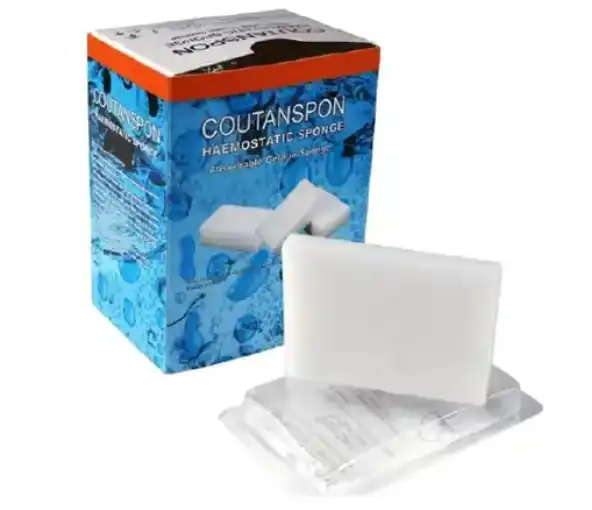
Understanding Gelatin Sponges: Medical Applications and Benefits
Core Medical Functionality and Mechanism
It is mostly the mechanical action of absorbable haemostatic sponges that does the work, not biological action. When put on a wound that is bleeding, the open structure soaks up blood and other body fluids, turning into a soft, mouldable mass that stops the bleeding. This absorption causes platelets to stick together and speeds up the body's natural clotting process. This creates stable clots that stop bleeding during surgery.
The biocompatible material made from pure gelatin sponge has great qualities for integrating with flesh. When used in the right amounts, clinical studies show that these devices are totally absorbed within four to six weeks in soft tissue applications, with little to no inflammation or scarring. The material melts and is taken within two to five days in mucosal uses, like nasal, rectal, or vaginal treatments. This makes it perfect for use in sensitive surgical areas.
Primary Clinical Applications
These haemostatic devices are used in several different medical specialities in hospitals. They are used by general surgery teams to stop bleeding during treatments in the abdomen and thorax. They are used by orthopaedic surgeons to stop bone bleeding during surgeries like joint replacements and spinal surgeries. Cardiovascular teams use them for treatments involving the heart and blood vessels, where precise stopping of bleeding is very important. Neurosurgeons like how gently they work with tissues during treatments inside the skull.
In addition to operating rooms, these machines are used in emergency rooms and trauma centres to save lives on the battlefield, handle workplace accidents, and stabilise people who have been hurt badly. They are used in obstetrics and gynaecology areas for C-sections and other birth control treatments. They are used after mouth surgeries and tooth extractions in dental offices. And they can be used in a lot of different ways. For example, these products can help shallow-degree burns and scalds heal faster.
Comparative Advantages Over Alternative Hemostatic Agents
When it comes to certain clinical situations, gelatin-based options are clearly better than collagen-based goods and oxidised cellulose. Because the material can absorb more and swell up faster, it can stop bleeding more quickly in cases where it is already happening. Because of how much they cost, these items are often a good choice for high-volume surgical sites that need to stick to a budget without sacrificing professional performance.
Biocompatibility ratings show that there are high levels of safety across a wide range of patient groups. The strict quality control and clean production process make sure that each batch works the same way. While some manufactured haemostatic agents can cause bad immune reactions, gelatin-based devices don't have that problem. This means that they can be used on a wide range of people with different medical histories and sensitivities.
Types of Gelatin Sponges and Their Functional Differences
Product Classification and Compositional Variations
The market for haemostatic devices is split into several separate groups based on their makeup and how they are made. The usual method is to use pure gelatin sponge formulas, which have been shown to reliably stop bleeding in clinical studies. Chitosan-blended versions combine the blood-clotting properties of gelatin with the germ-killing properties of chitosan, making them more resistant to infections in wounds that are already dirty. Collagen-integrated goods use the natural tissue-strengthening qualities of structural proteins to help stop bleeding and heal wounds at the same time.
The methods used to make a product have a big effect on its properties. Compressed forms have a high density and keep bleeding from happening for a long time, making them perfect for deep tissue uses that benefit from long-lasting pressure. Foam forms have more surface area for blood to adsorb, which makes them especially useful in wounds with uneven shapes where conformability is important. Because of these differences, surgery teams can choose goods that work best with certain body parts and types of bleeding.
Sterilisation Methods and Packaging Considerations
Sterilisation of medical devices has a direct effect on how well they work and how long they last on the shelf. Gamma radiation sterilisation is the normal method for these kinds of goods because it keeps the structure of gelatin matrices intact while killing all microbes. Ethylene oxide sterilisation is an option for goods that need to be handled more gently, but they need to be left to air dry for longer amounts of time to get rid of any leftover sterilant.
Different clinical processes and buying tastes can be met by different packaging configurations. Speciality practices that don't do a lot of work and need freedom and little waste can use individual sterile bags. Multi-unit boxes are useful for surgery centres that handle a lot of patients and want to save money and keep track of their supplies more easily. The YYD-MPD-001 absorbable haemostatic gelatin sponge from GREATMICRO Medical comes in clean packaging that can only be used once. This is to avoid cross-infection, which is an important safety measure in modern healthcare settings.
Absorption Timeframes and Clinical Performance Metrics
Clinicians and procurement workers can better match goods to specific procedure needs when they know how the products dissolve. In soft tissue uses, full absorption usually happens in four to six weeks, which is in line with how long it takes for wounds to heal naturally. As the tissue remodelling process goes on, the material slowly melts, and the swallowed parts are broken down by the body's natural processes. When applied to the mucosa, the foreign body dissolves faster, and it completely melts within two to five days. This reduces the appearance of the foreign body in sensitive body parts.
The main things that are used to measure clinical effectiveness are haemostatic time (the time between treatment and stopping the bleeding) and absorption fullness. In most surgery bleeding situations, high-quality goods stop the bleeding within three to five minutes. If there is no leftover material at follow-up exams, it means that the body absorbed the material properly. This is important to know for treatments where foreign bodies that are left behind could slow healing or cause problems.
Procurement Guide: How to Choose and Buy Gelatin Sponge for Your Organisation
Defining Organisational Procurement Scenarios
To do a good job of buying, you must first clearly understand what the company needs and how it will be used. Large general hospitals that do hundreds of surgeries every week need bulk buying deals that make sure they always have what they need while keeping unit costs as low as possible. Specialised surgery centres that only do certain treatments can get products that are specifically made to meet their narrow but high-volume needs. Outpatient clinics and community health centres put a high value on flexible buying systems that can adapt to changing demand trends.
Regulatory Certifications and Quality Standards
In the United States, buying medical devices requires either FDA clearance or approval, based on the type of device. Most haemostatic devices are in Class II or III, which means that makers have to show that their products are substantially equivalent to other devices on the market or provide clinical data to back up their safety and effectiveness claims. ISO 13485 certification verifies the quality management systems of manufacturers, making sure that production methods are uniform and that goods can be tracked all the way through the supply chain.
Market Overview and Supplier Evaluation
There are both well-known international companies and smaller, more specialised companies that make gelatin sponge haemostatic devices that compete in the global market. Institutional contracts are mostly given to big companies like Johnson & Johnson, Baxter, Covidien, Medline, and Smith & Nephew, which have well-known brands and large marketing networks. These sellers offer solid product availability and full expert support, but their prices are often higher than those of others in the market because of their market positions.
Pricing Frameworks and Order Optimisation
Knowing how prices are set helps people who work in buying get better deals and make better budget predictions. Volume-based tiering gives lower unit costs to orders that are bigger, and it's usually based on annual commitment levels or minimum order amounts. Rates are locked in for long amounts of time with contract pricing, which protects businesses from changes in the market and makes budgeting easier.
Project-based pricing allows for specific projects, like starting a new centre or expanding the surgical program, with terms that are tailored to each situation. Costs are affected by technical details. For example, special shapes, custom packing, or better ways to sterilise things command higher prices. To get the best value, procurement pros make sure that order quantities match up with real usage trends and that inventory carrying costs are balanced against chances for volume discounts.
How to Apply Gelatin Sponge: Best Practices in Clinical Settings
Surgical Site Preparation Protocols
The right way to use it starts with carefully preparing the surgery site to make sure it works best for stopping bleeding. The area of bleeding should be found and kept separate, and the tissues around it should be gently pulled back to make it easier to see and get to. To get rid of pooled fluid without stopping the formation of clots, extra blood should be carefully blotted, not wiped. This mixture makes it possible for the haemostatic agent to come into close contact with cells and blood vessels that are bleeding.
During the treatment process, the device should be handled in a clean way. Using surgical tools instead of protected fingers lowers the risk of infection and allows for more accurate placement. Sterile water can be used to slightly wet the sponge if it's needed to make it easier to shape to uneven surfaces, but too much wetting lowers the haemostatic effect by diluting the concentrated clotting factors.
Placement Techniques and Application Methods
The right placement method has a direct effect on how well the haemostatic process works. Applying the material directly over the area that is bleeding should be done with light pressure, making sure that it fits the shape of the tissue without squeezing it too much, which could cut off blood flow to nearby areas. The porous structure should be set up so that its surface has the most contact with the bleeding tissues. This will let blood flow through the matrix and cause a clot to form.
Keeping the pressure on for three to five minutes gives the haemostatic systems enough time to work. Early removal or moving stops blood clots from forming and makes bleeding last longer. Once the bleeding stops, the material shouldn't be taken out, but should stay in place so that it can be slowly absorbed as part of the healing process. If the first coating isn't enough, more coats can be added, but too many can make absorption worse and raise the risk of complications.
Safety Considerations and Common Pitfalls
Clinical experience shows that there are several application mistakes that can hurt results or raise safety issues. One common mistake is to use too much of a material, which can stop it from absorbing water and possibly cause nearby buildings to buckle. The material shouldn't be used in small areas where people can't get out because the swelling could cause problems with pressure. When placing something near nerves or inside a bone cavity, extra care must be taken to avoid crushing injuries.
Toxic shock syndrome has been linked to using haemostatic devices in nasal surgery. This shows how important it is to use the right amount of materials and keep an eye out for signs of infection. After tympanoplasty treatments, people have had hearing loss and fevers, which are probably caused by leftover material or inflammatory reactions. When absorbable goods are used incorrectly, they can cause too much scar tissue and long-lasting tendon attachment, which makes tendon repair harder. These uncommon but major problems show how important it is to follow the manufacturer's instructions and use good medical judgment.
Making the Right Choice: Gelatin Sponge vs. Other Hemostatic Solutions
Comparative Performance Analysis
To choose the right haemostatic agents, you need to know how different materials work in different clinical situations. Gelatin-based goods work great in general surgery settings where stopping bleeding quickly and ensuring proper absorption are important. Their mechanical action gives consistent results no matter how well the patient's blood clots, so they can be used even by people who are taking blood thinners. Because they are cost-effective, they are a good choice for surgical sites that do a lot of treatments every year.
Alternatives built on gelatin sponge have better tissue scaffolding qualities that may help wounds heal in some situations, but they cost more. It stops bleeding in a number of ways, such as by lowering the pH level in the area and physically squeezing the wound shut. However, it absorbs substances more slowly. Fibrin glue stops bleeding precisely through molecular processes that work like natural coagulation. It's great for delicate tissues but needs special tools to prepare and apply.
Clinical Scenario Matching
In some surgery cases, certain haemostatic methods work best. Fibrin-based products are often used in cardiovascular treatments to strengthen suture lines and seal arterial anastomoses. Gelatin-based devices are useful for neurosurgery because they are gentle on the tissue and absorb substances without causing inflammation near nerve structures. Orthopaedic bone bleeding reacts well to gelatin formulations because they can absorb a lot of fluid and mould to the shape of uneven bone surfaces.
Innovation Trends and Future Technologies
The market for haemostatic devices keeps changing as materials science and clinical studies give us new information. Composite formulas that combine multiple haemostatic mechanisms—for example, gelatin structures that are filled with thrombin or other procoagulants—promise to work better in tough bleeding situations. Through improved material structures, nanotechnology tries to make absorption better and lower inflammatory reactions.
Bioactive surfaces with growth factors or antimicrobials are another new idea that could turn haemostatic devices into tools for healing wounds that can do more than one thing. These new developments may come with higher prices, but they are useful in complicated cases, which makes the extra money worth it. If procurement professionals stay up to date on new technologies, their companies will be ready to adopt useful innovations as soon as they get governmental permission and clinical validation.
Conclusion
Gelatin sponges are still very useful in wound care, emergency medicine, and surgical specialities. Their proven efficiency, good safety profiles, and low cost make them the first choice for healthcare centers that have to meet a wide range of clinical needs on a budget. Professionals in procurement who know about the different types of products, how they should be used, and what suppliers can do can make the best buying decisions that offer clinical value while staying within budget. As the market for haemostatic devices changes, there are always ways to improve patient results through smart product choices and clever partnerships with suppliers. When organisations work with experienced makers, they get access to technical know-how, help with regulations, and the ability to make changes that meet the specific needs of healthcare markets around the world.
FAQ
How long does it take for absorbable hemostatic material to dissolve completely?
Absorption times depend on where the drug is used and the type of tissue it is in. Once the material slowly melts and is broken down by the body's natural processes, it is completely absorbed within four to six weeks in soft tissue surgery uses. When applied to mucosal surfaces, like the nose, the groin area, or the vaginal area, it dissolves faster, and within two to five days, it's completely liquefied. The process of absorption is affected by a number of things, such as the amount of material used, the level of saturation of the blood, and the exact position in the body.
What are the safety concerns associated with these hemostatic devices?
Even though it is usually safe when used correctly, there have been reports of some problems. When used in tendon healing treatments, it is possible for too much fibrosis and long-term tendon fixation to happen. Toxic shock syndrome has been seen in people who have had nose surgery. Tympanoplasty treatments have caused fevers, problems with intake, and loss of hearing. These uncommon problems show how important it is to follow the manufacturer's instructions, use the right amount, and use good clinical judgement when placing the device.
Can gelatin-based hemostatic products be used outside surgical settings?
These tools are useful in more places than just surgery rooms. They are used in emergency rooms to stabilise people with serious injuries and in military rescue situations. Accident sites at work gain from how quickly and easily they can be set up and used. They are used by dentists after extractions and other oral surgeries. They are used on burn units for scalds and burns with a low degree of heat. The single-use sterile package keeps infections from spreading, so they can be used in a variety of hospital settings where stopping bleeding is important. Can goods made from gelatin sponges be used for things other than surgery?
Partner with GreatMicroCare for Reliable Gelatin Sponge Supply
Healthcare procurement managers looking for a reliable maker of absorbable haemostatic gelatin sponges will find that GreatMicroCare has a wide range of options that are tailored to the needs of institutions. Our YYD-MPD-001 product always has the same high quality because it goes through strict production controls and has all the medical certifications that are required by international law. Direct factory buying cuts out the middleman and their fees, so it's a great way to get things for large orders or projects.
We can make changes to meet specific size needs, packing choices, and technical requirements that are in line with your facility's standards. A lot of experience exporting medical supplies, especially to South American markets, makes sure that conversation, paperwork, and customs clearance go smoothly. One-on-one account management through Jackwang@medicalky.com ensures quick answers to questions about technical specs, order tracking, and support after the sale. This lowers the risks of buying throughout the supply chain. Get in touch with us right away to get product samples, detailed datasheets, and a personalised briefing that will help you meet your goals for buying a haemostatic device.
References
1. Spangler D, Rothenburger S, Nguyen K, Jampani H, Weiss S, Bhende S. In vitro antimicrobial activity of oxidised regenerated cellulose against antibiotic-resistant microorganisms. Surgical Infections. 2003;4(3):255-262.
2. Achneck HE, Sileshi B, Jamiolkowski RM, Albala DM, Shapiro ML, Lawson JH. A comprehensive review of topical hemostatic agents: efficacy and recommendations for use. Annals of Surgery. 2010;251(2):217-228.
3. Humphreys MR, Castle EP, Andrews PE, Gettman MT, Ereth MH. Microporous polysaccharide hemospheres for management of laparoscopic trocar injury to the spleen. American Journal of Surgery. 2008;195(1):99-103.
4. Schonauer C, Tessitore E, Barbagallo G, Albanese V, Moraci A. The use of local agents: bone wax, gelatin, collagen, oxidised cellulose. European Spine Journal. 2004;13(Suppl 1):S89-S96.
5. Lewis KM, Spazierer D, Urban MD, Lin L, Redl H, Goppelt A. Comparison of regenerated and non-regenerated oxidised cellulose hemostatic agents. European Surgery. 2013;45(4):213-220.
6. Corral M, Ferko N, Hollmann S, Broder MS, Chang E. Health and economic outcomes associated with uncontrolled surgical bleeding: a retrospective analysis of the Premier Perspectives Database. ClinicoEconomics and Outcomes Research. 2015;7:409-421.