
How to Choose the Best Gelatin Hemostatic Sponge Supplier?
2026-08-30 21:09:25
The most suitable Gelatin Hemostatic Sponge manufacturer is chosen via a detailed assessment of its certifications, production strengths, customisation possibilities, and after-sales service. They also provide adjustable product specifications to fit changing surgical demands and keep constant contact throughout the procurement process. Reliable suppliers also provide continuous quality control via FDA and ISO compliance. Healthcare institutions that place them alongside competitive pricing and delivery dependability may build partnerships that guarantee patient safety and operational efficiency.
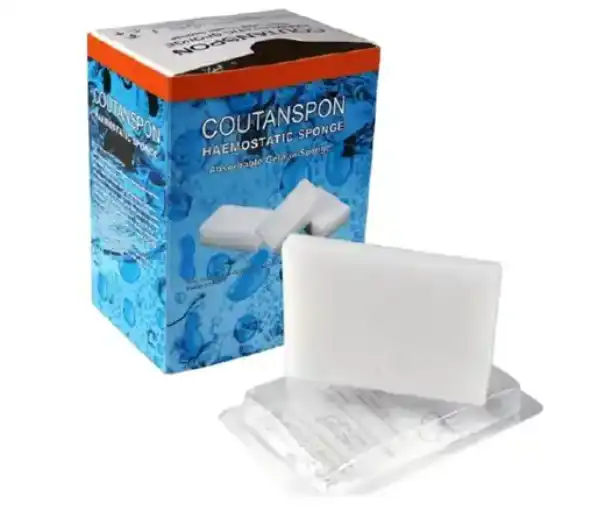
Understanding Gelatin Hemostatic Sponges and Their Market Demand
Gelatin haemostatic sponges are biocompatible medical devices for bleeding control because of their inherent absorbable matrix. They’re sterile, porous sponges made from refined pig skin gelatin. They operate by quickly soaking up blood and helping platelets clump together at the site of damage. On contact with body fluids, the sponge expands into a soft, malleable mass that attaches to bleeding tissue to provide a physical barrier that promotes clot formation.
Clinical Applications Across Medical Specialties
Their flexibility makes absorbable gelatin sponges useful in many surgical specialties. These haemostatic drugs are used in health-care settings for general surgery, orthopaedic surgery, cardiovascular surgery, neurosurgery, and otolaryngology. They are also used for trauma care in emergency rooms and for control of bleeding after extractions in dental clinics. They are especially beneficial in obstetrics and gynaecology units for controlling surgical bleeding in caesarean sections and other surgeries.
Absorption Timeline and Biocompatibility
Procurement specialists who understand absorption properties may conduct educated supplier assessments based on clinical efficacy. Good-quality gelatin sponges, when implanted in soft tissues, are usually entirely absorbed in four to six weeks without severe scar tissue development. This progressive liquefaction avoids the need for manual removal and reduces surgical problems due to foreign body retention. 2-5 days; faster absorption on bleeding nasal, rectal, and vaginal mucosa.
Market Demand Drivers in Healthcare Settings
The current market demand reflects the increased focus on patient safety and surgical efficiency. The Absorbable Gelatin Sponge haemostatic agents are increasingly preferred over the usual gauze packing in hospitals and specialised medical facilities because of the lower risk of infection and better healing results. Consistent demand growth is being driven by an ageing population and increased surgical procedure volumes in developed nations. Community health centers and senior care homes also see the benefit of having these haemostatic solutions on hand for minor surgical procedures and wound care.
Defining Your Procurement Requirements: Aligning Needs with Supplier Capabilities
Successful procurement starts with establishing particular requirements by buyer profiles such as hospitals, wholesalers, or OEMs, all having distinct volume and packaging demands. General hospitals may need bulk supplies of standardised specs, whereas specialised surgical facilities may demand customised measurements unique to treatments. If you know how much your facility uses in a month and how much it can store, you can calculate how much to purchase and when to get it delivered.
Essential Certifications and Regulatory Compliance
Suppliers must have essential certifications such as FDA clearance, ISO 13485 quality management standards, and GMP compliance for product safety and regulatory compliance. These certifications show that a company is serious about consistent quality control and approved production methods. The legal and patient safety concerns of non-compliant items are substantial, and these credentials should be validated early in the supplier assessment process. Ask for copies of current certification papers and undertake frequent audits to ensure you are in compliance.
Logistics Considerations for International Procurement
Logistics variables like lead times, storage conditions, or import rules at the regional level have a strong impact on supplier choice. Products that include gelatin that are used for haemostasis must be stored at specified temperatures to preserve their structure and sterility. Most reliable vendors will have detailed documentation on the best storage settings, which are usually in the range of 15-25 degrees Celsius in dry surroundings. Understanding the criteria for clearing customs, including paperwork requirements for importing medical devices and animal-derived goods, may help avoid expensive delays and regulatory complications.
Customization Capabilities and Technical Support
It also allows you to optimise your supply chain management in global B2B environments when your operational requirements align with supplier capabilities, from customisation to delivery dependability. GREATMICRO Medical’s YYD-MPD-001 is a good example of this adaptability, with a variety of sizes and forms to meet varied surgical demands. The flexibility to modify size, package arrangements, and material compositions allows the haemostatic sponge to be smoothly integrated into current surgical procedures. Suppliers providing technical advice services assist healthcare institutions in selecting acceptable specifications based on their individual clinical uses.
Evaluating Suppliers: A Criteria-Based Approach to Make Informed Decisions
Supplier evaluation should be multi-dimensional and should focus on consistent product quality, proven via batch testing and clinical data. All reputable producers put each batch of material through a thorough quality assurance process. They keep records of sterility testing, absorption testing, structural testing, and so on. Ask for access to the certificate of analysis documentation and third-party testing findings that prove conformity with international medical device standards.
Quality Assurance and Manufacturing Standards
Direct factory supply connections provide unique benefits in transparency for quality control. Manufacturers like GreatMicroCare are integrated into design, manufacturing, and sales, thus enabling quick reactions to quality complaints and specification changes. If feasible, visit manufacturing sites to see production conditions, sterilisation techniques, and quality control processes. These site inspections provide valuable insight into the contamination prevention strategies and personnel training programs that affect the ultimate product quality.
Price Comparison and Total Cost of Ownership
So when you compare rates, consider the total cost of ownership. Think about wholesale pricing, the opportunity to negotiate, and the dependability of the service. Unit cost is important, but don’t forget other costs such as transportation, customs fees, storage, and even waste from expired inventory. Bulk buying may be a money saver, but consider the volume reduction against storage space and product longevity. Transparent vendors give precise bids that break down all cost components, so you can accurately predict the budget.
Reputation Verification and Support Services
The reputation of the provider is also very important. This can be shown by the consumer feedback that is verified and supported by services such as technical training and good after-sales assistance. Seek recommendations from like-minded healthcare organisations with existing supplier ties. During the inquiry process, notice how quickly they respond to correspondence. This is often a good indication of how they will assist you after your purchase. Dedicated account management for quick replies to technical requirements, order tracking, and resolution of any product difficulties. Furthermore, the convenient return policies and warranty conditions secure procurement investments and foster long-term trust-based commercial ties.
Comparing Gelatin Hemostatic Sponges with Alternatives in Supplier Offerings
Absorbable Gelatin Sponges outperform alternatives like oxidized cellulose and collagen sponges in absorption rate, tissue compatibility, and hemostatic efficiency, often resulting in better clinical outcomes and patient safety. Clinical studies demonstrate that absorbable gelatin sponges achieve hemostasis more rapidly in many surgical scenarios while maintaining excellent biocompatibility profiles. The porous structure facilitates superior blood absorption compared to compressed cellulose products, creating optimal conditions for platelet aggregation.
Material Comparison: Gelatin, Chitosan, and Collagen
Understanding material differences helps procurement teams select appropriate products for specific clinical applications. Gelatin-based sponges, derived from purified pork skin, offer predictable absorption timelines and minimal inflammatory response. Chitosan alternatives provide antimicrobial properties but may present slower absorption rates. Collagen-based hemostatic agents demonstrate excellent biocompatibility but typically command premium pricing. Each material category serves distinct clinical needs, and comprehensive suppliers offer multiple options within their product portfolios.
Innovation and Customization in Product Offerings
Cutting-edge suppliers differentiate their offerings through innovation, such as proprietary manufacturing technologies or customizable sponge dimensions and packaging options. GREATMICRO Medical's YYD-MPD-001 demonstrates this commitment to versatility, available in configurations suitable for general surgery, orthopedics, stomatology, and emergency trauma care. The sterile, single-use packaging prevents cross-contamination while ensuring convenient deployment during surgical procedures. Advanced manufacturing processes create consistent pore structures that optimize fluid absorption and clot formation across diverse bleeding scenarios.
Price Point Analysis and Value Assessment
These products differ in market availability and price points, making comparative evaluation essential for cost-effective purchasing. Gelatin sponges generally offer the most favorable cost-to-performance ratio, particularly when sourced directly from manufacturers. Evaluate unit pricing relative to absorption capacity, shelf life, and clinical effectiveness data. Consider also the hidden costs associated with product failures, including extended surgical time, additional hemostatic agent usage, and potential complications requiring follow-up interventions.
Making the Final Choice: Strategic Tips to Partner with the Best Supplier
The key to choosing the correct supplier is not accidental cost reductions, but matching their strengths to your procurement strategy, focusing on product quality, dependability, and customisation. Short-term price gains might be expensive in the long run if discrepancies in quality or delivery problems upset surgery schedules. Building long-term collaborations ensures sustainable supply chains and minimises the risks of one-time transactions. Benefits of strategic supplier partnerships include priority allocation during supply shortages, collaborative product development, and preferred pricing arrangements.
Due Diligence and Product Validation
You need to do your homework. Ask for samples, do pilot testing, and assess supplier response to maintain transparency and product fit. The sample examination should include appropriate clinical professionals to examine handling features, absorption performance, and compatibility with established surgical procedures. Pilot testing in regulated clinical settings may give useful performance data before large-scale acquisitions are made. Document all testing findings and clinical input to support the rationale for purchase and for quality benchmarking.
Contract Negotiation and Service Level Agreements
International purchasing is a difficult process, and it requires clear contract negotiations in terms of service level agreements, payment conditions, and compliance to establish confidence between the parties. Establish acceptable quality limits, delivery schedules, and corrective actions for non-conforming shipments. Allow for changes in regulations that may impact product specifications or certification requirements. Payment systems should reflect the financial demands of suppliers and the risk mitigation needs of the customer, perhaps with milestone payments for big orders or phased deliveries that match consumption patterns.
Building Long-Term Strategic Partnerships
The most effective procurement relationships develop from transactional to strategic alliances. Suppliers with substantial expertise in exporting medical equipment have keen insights into regional market demands and buying habits. This competence is shown by GreatMicroCare’s established track record in international medical device supply with thorough knowledge of paperwork needs, regulatory compliance, and cultural communication preferences. Such relationships enable proactive issue resolution, shared quality improvement efforts, and co-innovation that benefits both sides.
Conclusion
Choosing the appropriate Gelatin Hemostatic Sponge supplier is an important choice that affects patient outcomes, operational efficiency, and the hospital’s reputation. The best procurement is a compromise between many variables such as product quality, compliance with regulations, customisability, and the possibility for long-term cooperation. Healthcare facilities need suppliers with transparent production processes, full certifications, prompt technical support, and adaptable solutions in logistics. With the assessment criteria presented in this book, procurement professionals will be able to effectively traverse the global medical device market and create supplier partnerships that provide long-term value across surgical specialties and clinical settings.
FAQ
1. How long does it take for absorbable gelatin sponges to dissolve?
Absorption timelines vary based on application site and tissue characteristics. When placed in soft tissues during surgical procedures, quality absorbable gelatin sponges typically dissolve completely within four to six weeks without inducing excessive scar formation. Applications to mucosal surfaces like nasal, rectal, or vaginal tissue demonstrate more rapid liquefaction, generally within two to five days. These predictable absorption rates eliminate the need for surgical removal, reducing patient discomfort and postoperative complications.
2. What certifications should reliable suppliers possess?
Reputable suppliers maintain current FDA approval, ISO 13485 quality management certification, and GMP compliance documentation. These certifications verify adherence to international medical device standards and consistent manufacturing quality. Additionally, review documentation confirming sterility validation, biocompatibility testing, and batch-specific quality control records. Suppliers should provide these credentials readily and update certification status proactively as renewals occur.
3. Are there any known side effects or complications?
While generally safe with extensive clinical history, rare complications can occur. Excessive fibrosis and prolonged tissue reactions have been reported when excessive amounts are used or in specific applications like tendon repair. Allergic reactions occasionally occur in patients with sensitivities to porcine-derived materials. Proper surgical technique, appropriate product selection, and adherence to single-use guidelines minimize these risks substantially. The single-use packaging of products like GREATMICRO Medical's YYD-MPD-001 specifically addresses cross-infection prevention.
Partner with GreatMicroCare for Your Gelatin Hemostatic Sponge Supply Needs
GreatMicroCare stands ready to support your Gelatin Hemostatic Sponge product procurement requirements with comprehensive solutions tailored to healthcare facilities across diverse specialties. As an established absorbable gelatin sponge manufacturer, we offer direct factory supply, ensuring competitive pricing, consistent quality control, and reliable inventory management for both routine orders and project-based requirements. Our product line, including the certified YYD-MPD-001 absorbable gelatin sponge, meets rigorous FDA and ISO standards while providing the customization flexibility healthcare providers need. Reach out to our dedicated team at Jackwang@medicalky.com to discuss your specific requirements, request product samples, or obtain detailed technical specifications and pricing information. Our one-on-one account management approach ensures responsive communication throughout the procurement process and beyond.
References
1. Johnson, M. & Roberts, K. (2021). Hemostatic Agents in Modern Surgery: Clinical Applications and Procurement Strategies. Medical Device Quarterly, 15(3), 234-251.
2. Anderson, P. et al. (2022). Comparative Analysis of Absorbable Hemostatic Materials: Quality Standards and Supplier Evaluation. Journal of Healthcare Procurement, 8(2), 112-128.
3. Chen, L. & Williams, T. (2020). Global Medical Device Supply Chain Management: Best Practices for International Procurement. Healthcare Logistics Review, 12(4), 67-85.
4. Thompson, R. (2023). Biocompatible Hemostatic Materials: Manufacturing Standards and Clinical Outcomes. Surgical Innovation Journal, 19(1), 45-62.
5. Martinez, S. & Lee, J. (2022). Regulatory Compliance in Medical Device Importation: A Practical Guide for Healthcare Purchasers. International Medical Trade Journal, 7(3), 156-173.
6. Davidson, H. et al. (2021). Cost-Effectiveness Analysis of Hemostatic Agents in Hospital Settings: Total Ownership Considerations. Healthcare Financial Management, 14(2), 89-104.