
Best Bedside Cabinet Materials for Hospitals and Care Homes
2026-09-18 22:14:03
The Bedside Cabinet is one of the most important pieces of hospital furniture to choose, as it has an immediate effect on the daily care of patients and on professional efficiency. The choice of materials impacts infection control, operational lifetime, and patient happiness. At GreatMicroCare, we know the hard choices procurement managers confront, weighing durability, hygiene compliance, and budget. Having manufactured medical-grade bedside cabinets, ranging from our flagship steel spray-construction bedside cabinet KY-KH8943-1, we are well positioned to assist healthcare facilities in selecting materials that maximise both immediate use value and long-term savings in general hospitals, speciality care centres, and elderly wellness facilities across the United States.
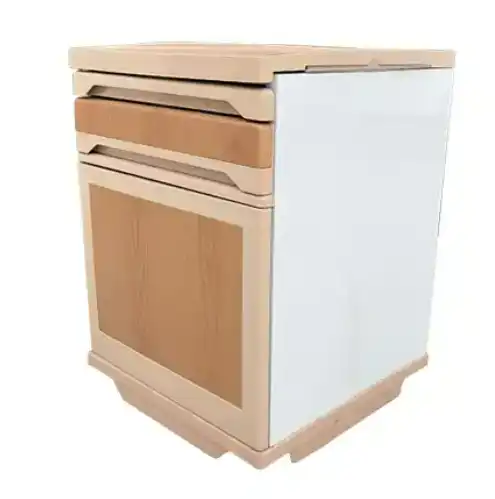
Overview of Common Bedside Cabinet Materials Used in Hospitals and Care Homes
Steel and Stainless Steel Constructions
The most common Bedside Tables in acute care settings are metal-based because of their durability and cleanliness properties. Our type KY-KH8943-1 is made from steel spray, dimensions 440×460×790mm. The sturdy structure can withstand the impact of busy hospital hallways. The steel spray finish offers a smooth, impermeable surface that resists bacterial adherence, but also allows for aesthetic appeal with customisable colour choices.
Stainless steel options provide improved corrosion resistance. This may be especially advantageous in humid conditions such as post-surgical recovery units. Even after years of repeated disinfection cycles, the material is inherently resistant to corrosion and oxidation. Stainless steel bedside cabinets are usually more expensive and thus are best used in critical care units and locations near operating rooms where infection control justifies the additional cost.
ABS and High-Density Plastics
ABS ( acrylonitrile butadiene styrene) and other high-performance engineering plastics are lighter and have great chemical resistance. Our designs use ABS tabletops that resist the spillage of drugs, drinks, and body fluids without staining or warping. They are much lighter than comparable metal materials, which lessens the physical burden while moving them, yet they can still withstand standard usage without losing their structural integrity.
Newer plastic compounds are naturally antibacterial and actively resist the growth of germs between cleanings. The manufacturing procedure allows the seamless moulding without any seams where dirt and bacteria might collect. Plastic composite cabinets are cost-effective, making them a good option for long-term care organisations that need to purchase big amounts of furniture for several resident rooms.
Wood-Grain and Laminate Options
Modern healthcare designs increasingly use wood-grain finishes that take into account the psychological advantages of home-like spaces. Modern laminate technology may resemble genuine wood and function almost as well as metallic or plastic variants. These surfaces are laminated to engineered wood cores or metal frames, providing visual warmth and practical endurance.
High-quality laminate bedside cabinets are sealed at the edges and have protective coatings to prevent moisture infiltration. Properly produced material withstands normal disinfecting methods without delamination. This choice is ideal for behavioural health units, hospice care, and rehabilitation institutions where the creation of a pleasant ambiance is an important element of the therapeutic aims, but cleanliness standards must be compromised.
Comparative Analysis of Bedside Cabinet Materials for Healthcare Procurement
Hygiene and Cleanability Assessment
There is wide variation in infection control efficacy across material types. The preferred material for cleanability is stainless steel because flat surfaces enable full removal of contamination with normal wiping procedures. Research has shown that adequate cleaning procedures may eliminate 99.9% of germs on stainless steel surfaces. Our steel spray build on KY-KH8943-1 is approaching comparable performance but with lower cost obstacles.
Plastic surfaces made from ABS with antibacterial compounds have almost identical hygiene ratings. Its non-porous structure avoids the absorption of liquids containing germs. With laminate choices, edges must be sealed carefully to avoid moisture penetration that degrades cleanliness over time. Healthcare institutions need to check for standard characteristics such as waterproof edge banding and sealed joints, which should be included in laminate bedside cabinets.
Durability and Lifecycle Considerations
The lifetime of the material affects the overall cost of ownership. Steel-framed cabinets that are properly maintained may easily last 15 to 20 years in demanding healthcare settings. The structure is designed to withstand repeated blows from equipment carts, wheelchairs, and normal wear patterns. At GreatMicroCare, we have quality control methods in place to guarantee that welded joints and strengthened stress points increase the operating life beyond industry norms.
Plastic composite units often allow 10-15 years before displaying noticeable wear; lesser load applications might prolong that timetable. It is more resistant to dents and chips than painted metal surfaces, so it looks good longer in high-traffic locations. Moisture issues may influence the lifespan of wood-core laminate cabinets unless specified with marine-grade moisture barriers adequate for clinical moisture levels.
Maintenance Requirements and Cost Analysis
Steel bedside cabinets are very low maintenance, other than regular cleaning. Steel spray finishes: Touch-up paint is available for small scratches. Stainless steel: Only the right cleaning product selection is necessary. Do not use chloride-based cleansers, which may cause pitting. Replacement expenses are concerned with moving parts (casters, drawer slides, etc.), not structural components.
Plastic units are naturally stain-resistant but may need more regular repair of surface-mounted hardware. As time passes, the mechanical fasteners might loosen due to the elasticity of the material. Laminate surfaces are more prone to edge damage, which needs refinishing or panel replacement. When assessing lifetime costs, healthcare procurement teams should consider how often they need to replace lower-cost solutions vs lower initial investment.
Regulatory Compliance and Certifications
Medical furniture certifications provide procurement confidence in safety and performance requirements. We manufacture in accordance with FDA medical device standards and ISO 13485 quality management systems. The KY-KH8943-1 Bedside Table is compliant with BIFMA (Business and Institutional Furniture Manufacturers Association) durability requirements suited to healthcare.
Material selection becomes more and more environmentally driven. At end-of-life, steel components are fully recyclable – complementing the environmental goals that many healthcare systems now require. We supply full technical documents such as material safety data sheets, VOC emission certifications, and declarations of conformity for smooth customs clearance for foreign purchases.
How to Choose the Best Bedside Cabinet Material for Your Healthcare Facility
Matching Materials to Care Settings
Bedside cabinets of steel or stainless steel that can endure intense usage patterns and vigorous cleaning schedules are best suited for acute care facilities. Their durability and infection control are especially needed in emergency rooms and critical care units. The KY-KH8943-1 model has a lockable drawer that helps to protect restricted drugs and sensitive patient information in compliance with regulatory requirements.
For those needing bigger unit numbers, long-term care institutions and assisted living communities may typically use ABS plastic or premium laminate choices to balance performance with economic restraints. These materials have a residential character that gives a sense of dignity and comfort to inhabitants spending lengthy amounts of time in these places. They have swivel wheels, so you can easily move the bed when you clean the room, but they stay steady while you are using it normally.
Specialty settings, such as paediatric units or behavioural health centers, need particular safety measures. Rounded edges, tamper-resistant hardware, and materials without detachable components that might become dangerous dictate material choices. Because we can customise, we can do dimensional changes and hardware changes to meet these unique safety requirements.
Establishing Selection Criteria
“Procurement teams need to create weighted scoring systems to assess materials on multiple performance dimensions. In hospitals with sensitive patient populations, hygiene skills usually have the top priority. Durability evaluations should take into account the overall cost during the estimated service life rather than just the purchase price.
Ergonomic issues affect worker happiness and efficiency. Smooth-moving casters let you move without straining your back. Low-force drawer mechanisms help nursing personnel avoid repeated stress injuries. Standard bed heights equal the surface height for convenient patient access without assistance. We provide flexible shelf layouts that may be configured for a variety of storage requirements across various clinical departments.
Budget limitations are real-world limits that need rigorous value analysis. GreatMicroCare’s direct factory supply reduces distributor markups and ensures high quality via integrated manufacturing control. Facility-wide furniture standardisation efforts also realise further savings via volume pricing on project-based procurement. We provide flexible payment options and delivery timing to assist with capital budget planning throughout fiscal cycles.
Real-World Implementation Examples
Recently, as part of the evaluation of performance on pilot units, a 300-bed acute care hospital in the Midwest standardised on steel spray bedside cabinets identical to our KY-KH8943-1 type. The institution claimed a 40 percent decrease in furniture replacement expenses over five years compared to older plastic versions. In nursing staff satisfaction surveys, convenience of use and dependability were rated higher.
An assisted living company with many sites serving senior clients in the Southeast picked our wood-grain laminate choices after they tested prototypes in resident rooms. The organization met its infection control criteria, and residents and families appreciated the visual warmth. Ordering in bulk allowed us to save money at 12 of the sites, and we were able to include enhanced features such as integrated power outlets and IV pole attachments.
Maintenance Tips and Long-Term Performance Optimization for Hospital Bedside Cabinets
Material-Specific Cleaning Protocols
Steel and stainless steel surfaces tolerate the broadest range of disinfectants, including bleach solutions up to 10% concentration. Environmental services staff should use microfiber cloths to prevent surface scratching while ensuring complete coverage. Avoiding abrasive scrubbing pads protects painted finishes from premature wear. Quarterly inspections checking for paint chips or rust spots enable preventive touch-ups before extensive damage occurs.
ABS plastic bedside cabinets perform best with quaternary ammonium or hydrogen peroxide-based cleaners, avoiding harsh solvents that could cause clouding or brittleness. Rinsing after disinfection prevents chemical residue buildup that may dull surface appearance over time. Hardware lubrication annually maintains smooth drawer operation and caster mobility.
Laminate surfaces require gentle cleaning products specifically formulated for furniture rather than floor or fixture cleaners containing harsh alkalis. Immediate spill cleanup prevents liquid penetration through any microscopic seam gaps. Edge inspection during routine cleaning catches early delamination signs, enabling repair before moisture compromises core materials.
Addressing Common Wear Patterns
Drawer slides represent the most frequent maintenance need across all material types. High-quality ball-bearing slides specified on our cabinets typically provide 50,000+ cycles before requiring replacement. Facilities should maintain a spare parts inventory for rapid replacement, minimizing downtime. Our dedicated account management ensures parts availability with technical support for installation guidance.
Caster wheels accumulate debris, affecting smooth rolling. Quarterly cleaning and bearing inspection prevent premature failure. Locking mechanisms should receive periodic testing to ensure reliable operation during patient transfers and procedures requiring cabinet stability. We provide detailed maintenance schedules with each delivery, optimizing performance across the cabinet lifecycle.
Surface scratches on painted steel cabinets can be addressed through touch-up paint matching the original finishes. Our color-matching services provide exact formulations for field repairs. More extensive damage may require professional refinishing or panel replacement. Maintaining spare components supports rapid refurbishment, extending overall furniture investment value.
Leveraging Manufacturer Support Services
GreatMicroCare's comprehensive service approach begins with pre-delivery specification confirmation, ensuring ordered units precisely match facility requirements. Our technical team provides installation guidance and assembly assistance for large-scale deployments. Warranty coverage protects against manufacturing defects, while our quality control processes minimize such occurrences.
Post-sales support includes responsive communication channels addressing technical questions, replacement parts procurement, and ongoing consultation for facility expansion projects. Our experience with healthcare exports to North American markets ensures an understanding of regional preferences and regulatory expectations. One-on-one account management provides continuity throughout multi-year procurement relationships.
Conclusion
Selecting appropriate Bedside Cabinet materials represents a strategic decision impacting patient care quality, infection control outcomes, and operational efficiency across healthcare facilities. Steel spray construction, ABS plastics, and modern laminates each offer distinct advantages suited to different clinical environments and budget parameters. Procurement professionals must evaluate hygiene performance, structural durability, maintenance requirements, and regulatory compliance alongside cost considerations. Our KY-KH8943-1 model exemplifies the balance of robust steel construction with practical features including lockable storage, adjustable shelving, and mobility systems. Partnering with experienced manufacturers providing comprehensive support—from customization capabilities through post-delivery service—optimizes procurement value while ensuring furniture investments reliably serve patient care missions for years ahead.
FAQ
1. Which bedside cabinet materials provide the best infection control?
Stainless steel and steel spray finishes offer superior infection control due to non-porous surfaces enabling complete disinfection. These materials withstand aggressive cleaning protocols without degradation. ABS plastics with antimicrobial additives provide comparable hygiene performance at a lower cost. Proper cleaning technique matters more than material selection—non-porous surfaces of any type prevent bacterial colonization when disinfected according to hospital protocols.
2. How do I balance cost considerations with durability requirements?
Calculate the total cost of ownership rather than focusing on the initial purchase price. Steel bedside cabinets commanding higher upfront investment typically deliver 15- 20-year lifespans versus 10-15 years for plastic alternatives. Divide the total cost by the expected service years to reveal the true annual expense. Volume purchasing through direct manufacturers like GreatMicroCare reduces acquisition costs while maintaining quality standards. Project-based pricing for facility-wide standardization delivers additional savings.
3. What eco-friendly bedside cabinet options exist for care homes?
Steel construction offers complete recyclability at end-of-life, supporting circular economy principles. Many manufacturers now utilize recycled content in steel components. Look for low-VOC certifications ensuring minimal off-gassing in residential care environments. Durable materials requiring less frequent replacement inherently provide environmental benefits through reduced resource consumption. Request environmental product declarations documenting lifecycle impacts supporting green building certifications and sustainability reporting requirements.
Partner with GreatMicroCare for Superior Hospital Bedside Cabinet Solutions
Healthcare facilities deserve furniture solutions combining clinical performance with procurement value. GreatMicroCare operates as a direct bedside cabinet manufacturer, eliminating intermediary costs while maintaining rigorous quality standards across our integrated production facilities. Our KY-KH8943-1 steel spray model and customizable alternatives address diverse requirements from intensive care units to long-term residential settings.
We support specification adjustments for dimensions, accessories, and structural configurations matching your exact technical parameters. Complete certification packages, including FDA compliance documentation, material safety data, and customs paperwork, facilitate seamless international procurement. Dedicated account management ensures prompt responses regarding technical specifications, order tracking, and after-sales support throughout our partnership.
Experience the advantages of working with an established medical equipment supplier offering one-stop solutions for bedside cabinets, medical carts, nursing beds, and comprehensive healthcare furniture systems. Our stable production scheduling and flexible logistics guarantee timely delivery, with robust packaging protecting your investment during transit. Contact our team at Jackwang@medicalky.com to discuss your specific Bedside Cabinet requirements and discover how our customization capabilities, quality assurance, and responsive service transform healthcare furniture procurement.
References
1. Healthcare Furniture Standards Committee. Material Selection Guidelines for Medical Furniture: Durability and Infection Control Criteria. American Hospital Association Press, 2022.
2. Morrison, K., and Chen, L. Comparative Analysis of Hospital Furniture Materials: Lifecycle Cost and Performance Assessment. Journal of Healthcare Facility Management, 2021, Volume 18(3), pages 45-62.
3. National Institute for Healthcare Improvement. Environmental Surface Hygiene in Clinical Settings: Material Properties and Disinfection Efficacy. NIHI Clinical Guidelines Series, 2023.
4. Rodriguez, M., Thompson, A., and Wu, S. Sustainable Material Selection for Healthcare Environments: Balancing Clinical Performance with Environmental Responsibility. Green Healthcare Quarterly, 2022, Volume 9(2), pages 112-128.
5. Centers for Disease Control and Prevention. Guidelines for Environmental Infection Control in Healthcare Facilities: Equipment and Furniture Specifications. CDC Healthcare Infection Control Practices Advisory Committee, 2021.
6. International Organization. Medical Furniture Performance Requirements: Material Testing Protocols and Certification Standards ISO 13485. ISO Medical Device Standards, 2023 Edition.