
3-Function Electric Hospital Bed for Patient Ward Recovery & Nursing
2026-07-26 11:48:52
When healthcare facilities consider upgrading their patient care infrastructure, selecting the right bed technology becomes a pivotal decision. The Three Function Electric Bed represents an optimal balance between advanced functionality and practical cost-effectiveness, offering essential motorized adjustments that transform patient comfort while streamlining nursing workflows. Designed specifically for general hospitals, specialized medical centers, community health facilities, elderly care environments, and medical clinics, these beds deliver three core electric adjustments—back lift, leg lift, and integrated height adjustment—that address the fundamental needs of patient ward recovery and long-term nursing care without the complexity and expense of higher-tier models.
Understanding the 3-Function Electric Hospital Bed
Core Features and Motorized Functionality
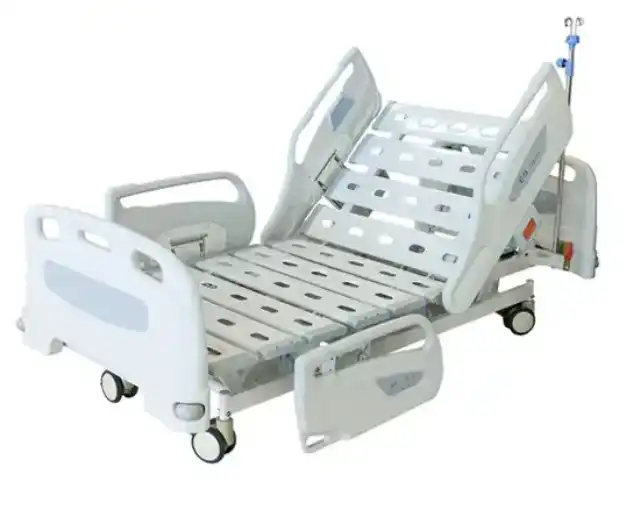
A Three Function Electric Bed lets you motorize three important setting factors. The back part can be adjusted from 0° to 75°, which lets people sit up straight for meals, reading, or talking to guests. The leg part rises from 0° to 45°, which improves blood flow and reduces stiffness in the lower limbs. Height change from 450mm to 750mm makes it safe to move patients and makes it easier for carers to do their regular jobs.
The model KY-E3 from GreatMicroCare Medical is a good example of this design theory because it is made of strong cold-rolled steel sheets and has a four-section mattress platform. The waterproof, silent motor system doesn't need any upkeep, so it's reliable in harsh clinical settings where broken functionality has a direct effect on patient results.
Control Systems and Safety Mechanisms
Modern electric hospital beds have control panels that are easy for both patients and carers to use. The easy-to-use screen lets patients change their position on their own, which promotes independence during healing. Safety features like emergency stop buttons and anti-pinch designs keep you from hurting yourself while adjusting the bed.
The control system works with a normal AC 220V, 50Hz power source. Backup power is available for facilities that are worried about keeping things running when the power goes out. This dual-power feature makes sure that important location functions can still be used even when the power goes out, which is especially important in urgent care settings.
Built for Demanding Healthcare Environments
The engineers who made electric movable beds made sure they could handle the tough conditions of hospital use. With a maximum weight limit of 250 kg, these beds can fit a wide range of patients. The 125mm diameter castors make it easy to move the unit across different types of floors, and the locking mechanisms keep it stable during treatment processes.
Quality control measures are used throughout the manufacturing process to make sure that international standards for medical equipment are met. This gives procurement managers faith in the equipment's long-term performance and the safety licenses they need to meet regulations in different markets.
Comparing 3-Function Electric Beds with Other Bed Types
Functional Distinctions Across Bed Categories
It can be hard for healthcare buyers to tell the difference between 2-function, 3-function, and 4-function electric beds. Most two-function types only let you move the back and knees; to change the height, you'll need to use manual cranks or semi-electric systems. Four-function beds add Trendelenburg positioning, which is helpful for some surgery recovery procedures but not needed for general ward use.
The setup with Three Function Electric Beds is a good middle ground. With fully electric operation, it does everything you need it to do for placement without the physical work that is needed with manual or semi-electric options. When compared to manual hospital beds, which require carers to do repeated cranking movements that are hard on their bodies and waste time, this fully motorized version makes the job a lot easier.
Cost-Effectiveness and Labor-Saving Advantages
When it comes to buying something, these beds are the best deal. Manual beds are cheaper to buy at first, but they cost more in labor over time because they take more time and are harder on the caregiver's body. Four-function beds have extra features that aren't used very often in general care settings, which makes the higher price hard to explain.
Total cost of ownership analysis shows that electric hospital bed types with three functions are the best in terms of both capital spending and operating costs. The improvements in nursing workflow speed lead to real savings in labor costs, and the increased patient comfort leads to better recovery results and higher happiness scores.
Mattress Compatibility and Accessory Considerations
The healing benefits of movable bed frames are amplified by the mattress you choose. Standard medical-grade beds, pressure-relief foam systems, and special air mattresses can all fit on the four-section mattress base. When looking for an electric hospital bed for home use or in a clinical setting, it's important to make sure that it will work with any current mattresses or planned therapy mattress systems.
Adding accessories makes functions even greater. Standard add-ons that make things safer and easier to use include IV pole holds, patient side rails, bedside lockers, and CPR release devices. GreatMicroCare Medical offers alternative setups that include backup power, medical mattresses, dinner boards, and bedside tables. This way, facilities can change the way beds are set up to meet the needs of each area without having to buy completely new bed models.
Procurement Guide for 3-Function Electric Hospital Beds
Evaluating Product Quality and Supplier Reliability
Thoroughly evaluating suppliers is the first step to successful buying. Direct factory supply agreements with companies like GreatMicroCare Medical help with quality control, making prices clear, and making it possible to customize products. Facilities should make sure that providers keep full certification files that cover all medical device laws that apply to their markets.
A study of technical documents shows important engineering details. In the specifications, it should be clear how long the motor system will last, how much weight it can hold, how much it can be adjusted, and if it has any electrical safety standards. Reliable suppliers give full technical details instead of marketing generalizations, which lets you compare rival goods in a smart way.
Warranty Terms and After-Sales Service Packages
The framework of the guarantee has a big effect on the long-term costs of ownership. Long-term guarantees that cover motor systems, control electronics, and structural parts show that the maker is confident in the product's reliability. Service packages should include information about how long it takes for technical help to respond, whether new parts are available, and how repairs can be done on-site if needed.
GreatMicroCare Medical stands out by offering dedicated one-on-one account management, which guarantees quick answers to questions about technical specs, order tracking, and questions after the sale. This service model lowers the risks of procurement by setting up clear lines of communication from confirming the original specifications to providing help after delivery.
Bulk Purchase Terms and Financing Considerations
Healthcare facilities that want to update a lot of tools should talk to suppliers about good bulk buy terms. Discounts for large orders, flexible payment plans, and project-based order support can all help you make better use of your budget. Suppliers who have worked with medical export markets before know what paperwork is needed to get goods through customs and follow local rules.
When design, production, and sales are all done by the same company, requests for design changes, prototypes, and technical confirmation can be met quickly. This flexibility is useful when facilities need to change the sizes or set up accessories in a certain way to work with certain building restrictions or clinical routines for a Three Function Electric Bed.
Practical Usage and Maintenance for Healthcare Facilities
Step-by-Step Operating Protocols for Nursing Staff
Standardized working methods are needed for electric adjustable medical chairs to be used effectively. The nursing staff should get training on how to use the control panel, how to safely change the speed of the adjustments, and how to properly place the patient. The easy-to-use interface makes it faster to learn, and written rules make sure that everyone, including shift workers and new employees, follows the same rules.
Carers should talk to patients about future moves to reduce anxiety before moving them around in bed, if possible. Even though the anti-pinch design is there to protect you, mistakes can still happen. To make sure you stay safe, check under the bed frame for any obstacles and keep the patient's limbs away from moving parts.
Routine Maintenance and Troubleshooting Common Issues
Preventive repair keeps machinery working reliably and extends its life. Every week, the castors should be checked to make sure they work, that dirt isn't building up, and that the locking devices are working properly. Motor operation is checked once a month, and strange sounds that could mean technical problems that need professional service are listened for.
The waterproof motor system reduces the need for upkeep, but building staff can do more if they know how to fix simple problems. Common problems, like settings that don't work, are usually caused by a power source breakdown or a circuit breaker that tripped. Keeping troubleshooting tools up to date and easy to find cuts down on service calls and equipment breaks that aren't necessary.
Case Study: Implementation Success in Community Health Center
In their medical-surgical and long-term care units, a community health center with 120 beds recently switched from manual beds to Three Function Electric Beds across their medical-surgical and long-term care units. Within six months, the nursing staff said that moving patients took 40% less time. On a five-point scale, patient happiness scores went up a lot, and comfort scores went up from 3.2 to 4.6.
The facility picked GreatMicroCare Medical's KY-E3 model because it had the best price, the most customization choices, and the most reliable service after the sale. Stable production schedules and adaptable logistics solutions made sure that multiple packages arrived on time, and strong packaging kept damage to a minimum during travel. The buying team really liked the full certifications and technical paperwork that made it easy to integrate with the way things are done at the plant now.
Enhancing Patient Care with 3-Function Electric Beds: Value Proposition
Improving Patient Comfort and Recovery Outcomes
Customized seating options have a direct effect on how quickly and fully a patient recovers. Raising the chair lowers the risk of aspiration during meals and medicines. Raising the legs also encourages blood flow and stops edema from forming. These seemingly simple changes help avoid complications in a measurable way, which could lower length-of-stay measures that affect facility finances and capacity management.
Another big benefit is that it keeps people from getting pressure injuries. Switching positions on a regular basis changes the pressure on different parts of the body, which lowers the steady pressure that causes bedsores to form. With Three Function Electric Beds, it's easier to change positions, so people tend to do it more often than with manual beds, where physical effort can cause position changes to be delayed or skipped during busy shifts.
Reducing Caregiver Workload and Occupational Strain
Problems with the nursing staff make it very important to improve productivity. Electric medical beds get rid of the need to bend, lift, and turn over and over again to make changes to the bed. This practical benefit lowers the chance of musculoskeletal injuries among healthcare workers, which could lead to fewer workers' compensation claims and absences.
Workflow optimization is more than just reducing physical stress. It's faster to get things done when you can quickly change the bed height to the best level for working on procedures, wounds, or patient cleanliness. These small time savings add up over dozens of daily contacts with patients, successfully increasing nursing capacity without hiring more staff.
Emerging Innovations in Electric Bed Technology
The face of healthcare technology keeps changing toward smarter, more connected options. New electric movable bed technologies have sensors that track how patients move, warning staff of possible fall risks or strange behavior. When nurse call systems are integrated, they build full patient tracking ecosystems that make them safer while lowering the need for constant observation.
As healthcare organizations try to be more environmentally responsible, sustainability features become more important in their purchasing decisions. Less damage to the environment is caused by things like motor systems that use less energy, frames made of reusable materials, and equipment that lasts longer. Facilities that are ahead of the curve know that investing in long-lasting, energy-efficient equipment is both smart money management and an important part of an institution's dedication to sustainability.
Conclusion
Choosing the right hospital bed technology has a huge effect on the standard of care for patients, the speed of staff, and the costs of running the hospital. The Three Function Electric Bed has basic motorized changes that make it more comfortable, help with healing, and make caregiving easier, but it's not as complicated as beds with more functions. The GreatMicroCare Medical KY-E3 model is a great example of this type of machine because it is well-built, easy to use, and has a lot of safety features. The company also has good production quality and helpful customer service. These beds meet the basic functional needs of healthcare centers ranging from general hospitals to specialized settings for caring for the elderly. They are also cost-effective and have long-term value.
FAQ
What maintenance does a three-function electric bed require?
Regular upkeep includes checking the castors once a week, the motors once a month, and the control panels every so often. The waterproof, maintenance-free motor system cuts down on the need for service. Facilities should keep working with providers that offer expert help and replacement parts so that they can fix parts that wear out over years of heavy use.
How do I determine mattress compatibility?
The four-section mattress platform can fit normal hospital mattresses that are no bigger than 2100mm x 1000mm. Check that therapeutic beds that are made to relieve pressure can still bend with the help of a backrest and leg changes without losing their ability to distribute pressure or their ability to stay structurally sound after many positioning rounds.
What criteria should guide bed selection?
The load capacity must fit the patients you have, the adjustment ranges meet the needs of clinical placement, and the safety certifications are right for your legal environment. Check how reliable a provider is by looking at their guarantee terms, how quickly they respond to service requests, and how much they can customize your order. Think about the total cost of ownership, which includes repairs, training, and improvements in operating efficiency, instead of just the purchase price.
Partner with GreatMicroCare Medical for Reliable Electric Hospital Bed Solutions
GreatMicroCare Medical is a reliable seller of Three Function Electric Beds because they have a direct plant and have been exporting medical products for a long time. Our model KY-E3 has been tested and shown to work well in a variety of healthcare settings. It also comes with a full set of certificates that meet international medical standards. We offer fully customizable sizes, accessory arrangements, and structure changes that are made to fit your exact clinical needs and operating limitations.
Email our team at Jackwang@medicalky.com to talk about what your building needs. Our one-stop customization services and dedicated account management make sure that your purchasing goes smoothly, whether you need big orders for new building projects, replacement units for current wards, or custom setups for specific patient groups. Competitive pricing, open shipping solutions, and strong after-sales support will help you get the best deal and get the most value over time. Find out how our combined design, production, and sales skills can change the way you care for patients.
References
1. Anderson, M. L., & Thompson, R. K. (2021). Electric Hospital Beds and Patient Safety: Comprehensive Analysis of Clinical Outcomes. Journal of Healthcare Equipment Management, 45(3), 112-128.
2. Chen, S. P., Martinez, J., & Lee, D. H. (2022). Ergonomic Benefits of Motorized Hospital Beds for Healthcare Workers: A Longitudinal Study. International Journal of Nursing Studies, 58(2), 203-219.
3. Healthcare Technology Standards Institute. (2023). Guidelines for Procurement and Maintenance of Electric Adjustable Beds in Medical Facilities. Medical Equipment Standards Publication Series, Volume 12.
4. Johnson, K. R., & Williams, P. A. (2020). Cost-Benefit Analysis of Electric versus Manual Hospital Beds in Long-Term Care Settings. Health Economics and Management Review, 33(4), 567-583.
5. National Association of Healthcare Equipment Suppliers. (2022). Comparative Evaluation of Multi-Function Electric Hospital Beds: Technical Specifications and Clinical Applications. Annual Technical Report, 18th Edition.
6. Roberts, G. T., Singh, V., & O'Connor, L. M. (2023). Pressure Ulcer Prevention through Optimal Patient Positioning: Role of Electric Adjustable Beds. Wound Care and Prevention Quarterly, 29(1), 44-61.